How to Choose Equipment for a Commercial Water Park

Equipment selection for a commercial water park should start with the guest experience and operating model, not a catalogue. A park’s age mix, admission capacity, season length, staffing, water-treatment capacity, and available site all influence which attractions make sense.

The same discipline used to understand How much does it cost to build a water park applies to product selection: define a complete scope, compare equivalent systems, and include installation and operation in the decision.
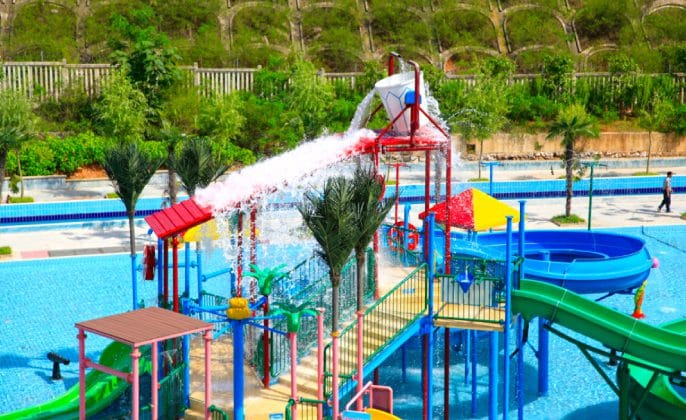
commercial water park equipment and attractions

Define the Guest Mix and Capacity

Children’s play, family slides, thrill slides, wave attractions, and lazy rivers serve different audiences. A balanced park may need several categories, while a resort or small commercial venue may prioritize compact family attractions.

Estimate realistic peak and normal attendance before selecting product sizes. Large slides can dominate the visual identity but may not suit a park whose guests mainly seek shallow play and shorter waits.

Equipment Categories to Compare

Equipment group Selection criteria Supporting scope
Children’s play Age fit, sightlines, and maintenance access Shallow water, surfacing, and shading
Water slides Ride type, height, capacity, and landing Tower, pumps, runout, and queue
Wave or pool features Guest appeal and operating complexity Water volume, plant, and safety systems
Lazy river Length, access, and tube flow Circulation, entry points, and maintenance
Interactive attractions Durability and staffing Controls, water supply, and drainage

Compare Product Cost with Supporting Cost

The body slide installation cost and water slide installation cost by type usually extend well beyond the attraction itself. Towers, pumps, treatment, drainage, landscaping, changing areas, and control systems must be included.

For each product, ask what flow and electrical supply it requires, how many staff positions it adds, and what spare parts must be stocked. The lowest factory price may be the most expensive choice if it creates excess water treatment or maintenance demand.

Water Quality and Circulation

Treatment should be sized for the entire attraction mix, including simultaneous operation. Confirm filtration, disinfection, testing, backwash, isolation, and emergency procedures. Product choices that trap water or are difficult to drain should be avoided.

Review inspect the splash pad layout and water-system drawings together. The splash pad and slide schematics should align with the circulation strategy rather than becoming separate projects on the same site.

Check how each attraction behaves when one water-treatment train is taken out for service. The park should understand which pools or features must close and whether the remaining operation stays within the approved procedures.

Record that operating condition in the treatment manual and staff training.

The approved response should also appear in the commissioning record.

Materials and Guest Safety

Use materials that resist sun, water, cleaning, and wear. Fasteners need corrosion protection, and all guest-contact surfaces must be smooth and maintainable. Silicone may be used in selected seals or flexible components where the manufacturer specifies compatibility.

Check age limits, access, guard details, slip resistance, and emergency access for every product. Local requirements and the park’s own risk assessment should be part of the selection sheet.

Assess Installation and Site Fit

Large equipment must fit the delivery route, foundation plan, maintenance access, and building or landscape envelope. Hilly sites may need retaining structures, while existing utilities may constrain where pumps and treatment equipment can be placed.

  • Confirm the full operating footprint.
  • Verify lifting and service access.
  • Locate the plant near suitable utilities.
  • Keep maintenance routes separate from guests.
  • Plan drainage before selecting finishes.

Review the Operating Model

Separate must-have attractions from optional additions

Build a shortlist of attractions required to deliver the promised guest experience. Then compare optional additions against capital cost, water demand, staffing, and maintenance. A well-balanced opening package may outperform a larger collection that stretches operations beyond what the park can support.

Score each product on audience fit, capacity, visual importance, technical risk, and lifecycle cost. Review the scores with operations and finance rather than selecting from appearance alone.

For each shortlisted attraction, prepare a one-page decision sheet with the full operating footprint, utility demand, staffing requirement, annual maintenance needs, and required spares. This gives the project team a common basis for choosing between alternatives and shows which support costs must be funded before opening.

The operator must be able to inspect, clean, isolate, and repair each attraction. Review staffing, training, record keeping, chemical handling, spare parts, and response times. A product that requires specialist support without local availability may reduce uptime.

Compare Suppliers on Complete Evidence

Ask each supplier to provide drawings, equipment schedules, water demand, electrical demand, installation responsibilities, training, and exclusions. A team such as the Dinis commercial water park team should explain how its products integrate with the rest of the water park.

Use one comparison sheet for every proposal. Include equipment, support systems, installation, commissioning, maintenance, and lifecycle cost. A water park equipment solutions supplier can help align attractions with circulation and treatment planning.

Stage the Investment

A commercial water park can grow in phases. Prepare infrastructure locations now for future attractions while opening with a focused package that fits current demand and staffing. Avoid oversizing every system for a hypothetical final park.

Stage gates should preserve future access, utility capacity, drainage routes, and guest flow. The expansion plan should be documented with the initial equipment selection.

Choose Equipment as an Operating System

The right equipment package fits the guests, site, water treatment, maintenance team, and commercial plan. Select products with evidence, compare all supporting costs, and inspect the layout as a complete operating system.
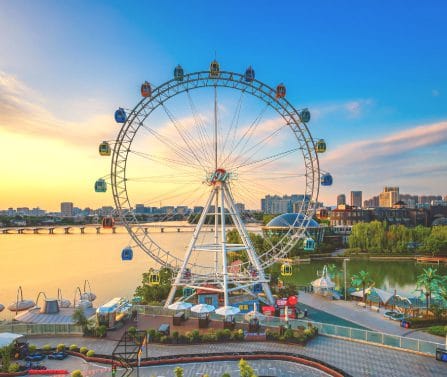
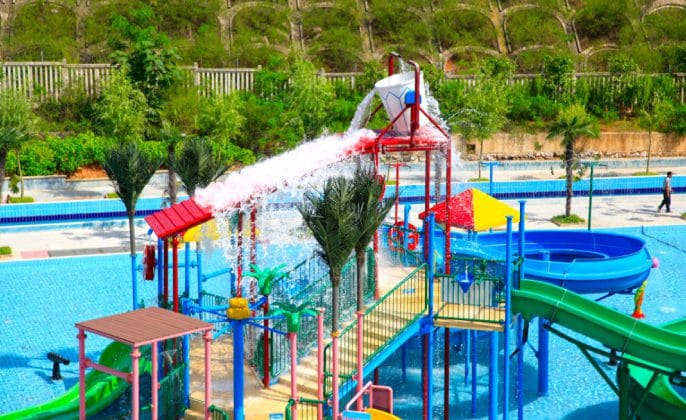
water park slides and supporting water systems

commercial water park attraction equipment

water play equipment and park infrastructure

How Much Does Water Park Equipment Cost?

Water park equipment does not have one universal cost. A single water-play feature, a splash pad package, and a collection of slides and aquatic attractions involve different engineering, treatment, installation, and operating requirements. Even similar-looking products can vary because of materials, controls, site conditions, and the services included in the offer.

A useful budget is therefore built from a complete scope. Buyers should compare How much does it cost to build a water park as one reference point, but the equipment quotation must be connected to the actual site and operating plan.

water park equipment in a family attraction

Equipment Cost Is More Than the Product List

The visible attraction is only one part of the investment. Pumps, filtration, disinfection, controls, pipework, valves, drainage, and electrical work may cost more than the play features themselves. Delivery, installation, commissioning, training, and spare parts also belong in the comparison.

Scope area Typical items Main price driver
Water-play products Spray features, slides, structures, and controls Feature count and intended users
Hydraulic system Pumps, pipework, valves, and storage Flow and water volume
Treatment Filtration, disinfection, testing, and alarms Operating method and capacity
Site construction Foundations, drainage, utilities, and surfacing Ground and service conditions
Delivery and installation Freight, lifting, assembly, and commissioning Access, distance, and labor
Operation Training, manuals, spares, and maintenance Complexity and support model

Water-Play Products and Attraction Type

A compact splash pad has a different cost structure from a water slide complex or a themed children’s playground. Features that require pumped circulation, treatment, continuous supervision, or specialized structures increase the supporting scope.

When deciding how to choose splash pad equipment, begin with the age groups and expected throughput. More features are not necessarily better if the site cannot support the water system or the operator cannot maintain them. Choose a focused product package before asking for final pricing.

  • List every feature and its intended user group.
  • Confirm required flow and control zones.
  • Identify treatment and drainage responsibilities.
  • Plan maintenance access and spare parts.
  • Use one site drawing for every quotation.

Pumps, Treatment, and Controls

Pumps and treatment equipment must be sized for the finished attraction. A larger feature package may require more flow, filtration capacity, storage, and controls. The quotation should show the selected equipment and the design basis rather than a generic allowance.

Control panels affect operation and troubleshooting. Ask whether zones can be isolated, how alarms are displayed, and whether diagnostics require remote support. The park should receive the information needed to train attendants and maintenance staff.

Materials and Component Quality

Material choices should match water exposure, cleaning, and local climate. Fasteners, nozzles, covers, and service parts need suitable corrosion protection. Polyvinyl chloride may be used for approved piping or selected components where the system design confirms pressure and temperature suitability, but its presence alone does not prove overall quality.

Look for a complete material schedule and maintenance guidance. The lowest-priced offer may use thinner components or omit protective details that increase life-cycle cost. Compare the bill of materials, not only the outer appearance.

Site Work and Installation

Existing utilities and ground conditions can change the project dramatically. A level site with available power and drainage may require less work than a sloping site with long service routes. Access for delivery and lifting should be checked before the final equipment dimensions are approved.

Ask who provides foundations, trenching, water connections, electrical supply, and final reinstatement. Interface gaps often appear as extra costs after the equipment contract is signed.

Build the Equipment Price Around the Site

Include support systems in the quotation

Review the water park equipment pricing using actual quantities and local rates. Separate factory equipment from freight, installation, site work, and commissioning. Keep a line for contingency and for items the buyer still needs to procure.

The quotation should also show the assumed utility capacities and connection points. This helps the buyer check the design against the actual site before equipment fabrication begins.

  1. Approve a site layout and operating concept.
  2. Request a technical equipment schedule.
  3. Price local utilities and civil work.
  4. Confirm treatment, controls, and training.
  5. Compare landed and installed totals.
  6. Review annual operating and maintenance costs.

Compare Suppliers on the Same Deliverables

A proposal for water park equipment should include drawings, equipment specifications, hydraulic information, installation responsibilities, spare parts, training, and warranty terms. Exclusions must be stated clearly. If one supplier excludes treatment while another includes it, the headline totals are not comparable.

Designs developed by splash pad design by Dinis should be evaluated against the final operating team and site. To view water play design options and compare complete systems, work with a childrens water park equipment partner that can explain which components, services, and maintenance requirements are included.

Look at Total Operating Value

The lowest purchase price can create higher annual costs if equipment is inefficient to operate, difficult to service, or dependent on long-lead parts. Review power, labor, chemicals, water replacement, inspection, and renewal costs for each option.

Ask for a recommended first-season spares list and local support plan. Confirm that the park can safely perform routine checks and knows when to call a qualified technician.

Commission Before Final Payment

Test the water-play products, pumps, treatment, valve operation, controls, alarms, and shutdown functions. Check installation quality, drainage, access, and documentation. Final acceptance should confirm that the delivered system matches the approved specifications.

Water park equipment cost becomes meaningful only when it describes a complete, maintainable attraction. Define the site and operating needs first, compare identical scopes, and budget beyond the opening day.

water play equipment and supporting systems

commercial water park equipment showcase

splash pad and water park equipment components

How to Build a Water Play Area for Children

A children’s water play area can transform an unused part of a park, resort, campsite, or family venue into an active attraction. The project does not need to reproduce a full water park. A carefully planned area with shallow water, spray features, seating, shade, and safe circulation can provide a focused experience for younger guests and their caregivers.

The planning process should begin with the users and the site rather than a catalogue. Deciding how children will enter, play, rest, and leave will shape the equipment, drainage, treatment, and supervision requirements. Buyers comparing early schemes should also review How much does it cost to build a water park using one complete scope. The same approach makes the water park construction expenses overview easier to compare and control.

childrens water play area in an outdoor park

Define the Purpose and Age Groups

Start by describing the expected visitors. A toddler splash area needs shallow water, gentle spray, close caregiver seating, and strong sightlines. Children of primary-school age usually want more varied features, routes, and active play. A family resort may need both groups without allowing fast movement through the toddler zone.

The operating model also matters. Is the water play area included with park admission, offered to hotel guests, booked for parties, or operated as a separate attraction? The answer affects entry control, staffing, ticketing, opening hours, and the amount of supporting space needed around the water.

Survey the Site Before Choosing Equipment

Record the available footprint, slope, soil conditions, overhead obstructions, wind exposure, and routes for utilities and maintenance. Identify where water enters, drains, and can be isolated. Confirm that changing rooms, toilets, storage, first aid, and family seating can be connected without crossing the busiest play zone.

  • Mark the full operating area, not only the wet surface.
  • Show caregiver sightlines from entrances and seating.
  • Confirm drainage falls and routes for heavy rain.
  • Locate the plant area where noise and access are suitable.
  • Keep emergency and maintenance routes separate from play traffic.

Choose a Water Play Layout

Children move between features more freely than a simple circulation diagram suggests. Group gentle features for small children, keep active spray zones separate, and avoid creating narrow pinch points where children can collide. Shade should be visible from the water, while seating should let caregivers supervise several zones at once.

Area Primary planning decision Risk to manage
Toddler zone Shallow water, gentle effects, close seating Fast movement and unclear boundaries
Active spray zone Feature spacing and changing spray patterns Congestion and reduced visibility
Entry and exit Clear gates, capacity control, and shoe storage Cross-flow and unsupervised entry
Caregiver area Shade, seating, and uninterrupted sightlines Obstructed views and crowded access
Plant and service area Separate access, ventilation, and storage Guest contact and delayed maintenance

Select Equipment as One System

Water-play features, pumps, filtration, disinfection, controls, drainage, and surfacing must work together. A feature package that exceeds the treatment or circulation capacity is not a valid design. Ask for the hydraulic plan, control philosophy, maintenance access, and recommended spare parts.

Materials should suit outdoor exposure and cleaning. Spray nozzles need to be reachable, surfaces should be slip-resistant, and fasteners should resist the local environment. Acrylic resin may be appropriate for selected transparent or molded components in some water-play assemblies, but the supplier must confirm suitability and maintenance needs. The complete installation still requires a documented inspection plan.

water spray and play equipment for children

Plan Water Treatment and Daily Operation

The operating team should understand how water is filtered, treated, tested, and recorded. Confirm chemical storage, dosing controls, backwashing, shutdown procedures, and emergency responses. Ask who is authorized to change control settings and how faults are indicated.

Design for practical maintenance. Pumps and valves should be accessible without crossing the wet area. Strainers, nozzles, and sensors should be serviceable with common tools. Spare parts should be identified before opening, especially parts that can interrupt operation when they fail.

Budget the Complete Project

Compare water park construction costs by size only when each proposal covers the same work. A complete budget can include design, equipment, delivery, groundworks, drainage, water treatment, utilities, surfacing, shade, fencing, signage, storage, training, spare parts, and commissioning. Permits and inspections may also apply.

  1. Obtain a line-item equipment and installation scope.
  2. Separate site work from attraction equipment.
  3. Use local quotations for utilities and civil work.
  4. Include training, manuals, and initial spare parts.
  5. Keep contingency for site conditions and approved changes.

The project should also have an opening budget. Cleaning supplies, test reagents, replacement parts, staff time, and routine maintenance continue after commissioning. These costs belong in the operating plan, not in a hidden corner of the capital budget.

Compare quotations without comparing incomplete prices

Ask every supplier to state exclusions in writing. Check whether foundations, drainage, electrical supply, water storage, fencing, and commissioning are included. A proposal that appears inexpensive may simply leave more work for the buyer.

Build a Safety and Supervision Plan

Local rules determine many safety requirements, but the operator still needs a plan that matches the actual layout. Define capacity, admission rules, supervision positions, cleaning intervals, incident reporting, and shutdown triggers. Make sure signs are readable before entry and that staff can see every active zone.

Children’s water areas created with water park equipment built by Dinis should be supported by drawings, operating instructions, and training that local staff can use. The plan should identify which tasks require a qualified technician and which can be completed by trained attendants.

Commission and Test the Finished Area

Before opening, test every feature, valve, drain, control mode, and alarm. Operate the treatment system through normal and fault conditions. Check water clarity, surfacing, gates, shade, signage, and emergency access. Record baseline readings and confirm that the operator has all manuals and spare parts.

A controlled soft opening can reveal circulation problems, unclear signs, or crowded routes before full promotion begins. Observe how caregivers use the seating and how children move between zones. Adjust staffing and operating rules based on what the site actually shows.

Start with a Buildable Brief

A successful children’s water play area comes from a clear brief: who will use it, how many zones are needed, how it will be maintained, and what the complete project includes. Use one scope and one cost structure for every proposal. To review the splash pad plan and define the equipment package, work with a water park equipment partner that can connect the play features with treatment, controls, and installation requirements.

family water play area with childrens spray features

childrens water play area equipment and layout

How a Water Park Can Increase the Appeal of a Hotel

Hotels compete on location, rooms and service, but families choose on something simpler: whether the children will be happy. A water park is one of the few amenities that answers that question immediately, and it is visible in photographs before a guest ever books.

This article explains how a hotel water park increases appeal commercially, what to build, and how to measure whether it worked.

hotel water park with pool and slides

Why Families Choose Water Amenities

  • Immediate signal. A photograph of slides and splash play tells parents the property is family-friendly.
  • Built-in entertainment. The park fills the hours between meals and excursions.
  • Repeat visits. Children ask to return to a specific pool or slide.
  • Review content. Water play generates positive reviews and user photographs.

Those effects are worth more than the ticket revenue the park might generate, which is why the investment case should be built on occupancy and rate rather than on day passes.

What Appeal Means Commercially

Appeal shows up in four places: average daily rate, occupancy in the family segment, length of stay, and review scores. A water park can lift all four, but only if it is designed for the guests the hotel actually wants. A thrill slide in a couples-oriented resort does not increase appeal; it creates noise and maintenance cost.

Before approving a cost to build a water park, model the rate and occupancy effects. A five-point occupancy lift across 200 rooms usually contributes more than the park’s own ticket line.

Keep the water park construction expenses in a separate budget line from rooms and restaurants. Water attractions carry different maintenance, staffing and insurance implications, and mixing them into the property renovation budget hides the true cost.

resort splash area and pool

What to Build

For most hotels the answer is a splash structure, two or three slides and a leisure pool, with shaded seating and a small food outlet. A wave pool is rarely justified below roughly 4,000 m² because of the plant and lifeguard load.

Treat the water park project investment as a phased commitment rather than a single purchase: stage one opens the core amenities and proves demand, and stage two adds slides from operating cash flow.

Slide shells and play panels are commonly produced in fibreglass and stainless-steel frameworks. The finish matters more in a hotel than in a public park: Stainless steel fixings and UV-stable gelcoat keep the area looking new, which is what guests photograph and review.

Guest Experience Details

The difference between a good hotel water park and a great one is usually in the details: shade, seating for parents, a shallow area for toddlers, a visible lifeguard, and changing facilities that do not require walking through the lobby. These cost a fraction of the attractions and drive most of the guest satisfaction.

Measuring the Impact

Track four numbers before and after opening: average rate in the family segment, weekend occupancy, length of stay, and review score for family travellers. Compare against a control period and against similar properties where possible. If the park does not move those numbers, the problem is usually positioning or guest mix, not the ride list.

hotel pool deck and water play

Risks to Manage

  1. Noise affecting rooms near the park
  2. Under-sized changing facilities at peak
  3. Lifeguard staffing during shoulder seasons
  4. Heating costs if the park is expected to operate year-round
  5. Maintenance backlog affecting the guest experience

How to Market the Water Park

The park only increases appeal if guests know about it. Put water imagery in the booking funnel, not only on an amenities page. Show the splash area in the family room gallery, mention it in the room description, and train reservations staff to offer it by name. A park that guests discover at check-in cannot influence the booking decision.

Photographs matter more than copy. Shoot the park with families in it, at the time of day when the light is best, and include the shade and seating that parents care about. Those images become the property’s most effective family marketing asset.

Designing Review-Worthy Moments

Guests review what they photograph. A themed splash structure, a colourful slide tower and a clean, well-shaded deck give them something worth sharing. Small details – a shallow toddler area, a visible lifeguard, a shaded seat for parents – generate the comments that reassure the next family.

None of these details require a larger budget. They require deciding, early, that the park is a guest experience rather than a construction project.

Staffing is the final detail: a hotel park needs a consistent lifeguard roster across weekends and holidays, and guests notice when the same team is present. Continuity builds trust, and trust is what turns a first stay into a repeat booking.

Frequently Asked Questions

Does a water park really increase hotel revenue?

It can, mainly through rate and occupancy in the family segment. The effect depends on the market and on how well the park is marketed.

How big should it be?

Size it to peak occupancy, not to the plot. Most hotel parks fall between 300 and 1,500 m².

Should day passes be sold?

Only with separate access control and enough changing capacity. Decide before the layout is fixed.

hotel water park investment

Next Step

Send us the room count, guest profile and site area, and we will recommend a park size and mix. Our Dinis water park construction team can deliver the attractions and plant together, and as an amusement equipment supplier we can advise on site integration. For the full cost breakdown behind the review the details, see our cost guide.

How Much Money Do You Need to Start a Water Park?

Asking how much money is needed to start a water park usually produces a single headline figure. That figure is almost always the construction cost, and it is almost always too low, because it leaves out the money you need to survive the first season.

This article separates the two: the capital needed to build the park, and the working capital needed to open it and keep it running until ticket revenue catches up.

small water park under construction

The Short Answer

A small water park with a splash pad, two or three slides and a leisure pool typically needs USD 500,000 to 1.5 million in total startup money, including construction, equipment and the first season of working capital. A medium park of 2,000 to 10,000 m² usually needs USD 4 million to 8 million. The upper end of each range assumes imported equipment and a full service building.

The cost of constructing a water park is only part of that. Operating expenses begin on day one: staff, energy, chemicals, insurance, marketing and maintenance, whether or not the park is busy.

What the Startup Money Covers

Block Share of startup capital Notes
Site works and civil 15 – 25% Earthworks, pools, decks, drainage
Attractions and equipment 30 – 45% Slides, splash structures, play units
Water treatment and plant 10 – 18% Filtration, pumps, disinfection
Buildings and facilities 10 – 18% Entrance, changing rooms, F&B
Pre-opening and working capital 10 – 15% Staff, marketing, stock, contingency

The last line is where most first-time operators under-budget. A park can be fully built and still fail because it cannot pay wages in the first three months.

water park construction planning

Working Capital: The Number Nobody Quotes

Working capital is the cash needed to operate before revenue stabilises. It should cover three to six months of fixed costs, plus a buffer for a slow opening season. For a small park that often means USD 80,000 to 200,000; for a medium park, USD 400,000 to 900,000.

Include the costs that do not wait for visitors: lifeguard certification, insurance premiums, utility deposits, point-of-sale systems, opening marketing and the first stock of chemicals.

Should You Build in Phases?

Yes, for most first-time operators. A phased opening reduces the capital at risk and tests demand before the larger commitment. Open with the splash zone, the leisure pool and one slide tower, then add the remaining attractions from season-one revenue.

Phase the plant room for the final park, though. Resizing filtration and pipework later costs far more than the interest saved by delaying it.

Where the Money Goes Wrong

  • Theming overspend. Imported rockwork and feature structures can add a third to the entrance plaza.
  • Under-sized plant. Expanding treatment capacity in year two is expensive.
  • No contingency. Ten percent is not optional on an unsurveyed site.
  • Optimistic attendance. Model the first season at half your opening-weekend figure.
  • Currency exposure. Equipment paid in a foreign currency can move five percent before delivery.

water park guest facilities

Estimating the Turnkey Figure

If you want a single number rather than a range, ask suppliers for a turnkey water park project cost that itemises civil works, attractions, plant, buildings and installation. The cost of building a water park should then be checked against that itemisation, not against a marketing brochure.

Materials matter here too. Slide structures and support frames are often built from Aluminium alloy and steel, and the specification affects both the purchase price and the maintenance budget for the next decade.

A Sample Startup Budget

Take a 1,500 m² park with a splash pad, two body slides and a leisure pool on land the owner already holds. A realistic split might look like this:

  • Site works and pool shells: USD 180,000
  • Attractions and slides: USD 260,000
  • Filtration and plant room: USD 110,000
  • Changing rooms and entrance: USD 90,000
  • Installation and commissioning: USD 45,000
  • Pre-opening marketing and stock: USD 25,000
  • Six months of working capital: USD 120,000
  • Contingency at ten percent: USD 83,000

That is roughly USD 913,000. Note that working capital and contingency together account for almost a quarter of the total. If those two lines are removed to make the project look cheaper, the park opens without the money it needs to reach its first profitable season – which is exactly how well-built water parks fail.

A note on land: if the site must be purchased, budget it as a separate line. Land is not a construction cost, it cannot be depreciated in the same way, and mixing it into the park budget makes the operating case look better than it is.

Frequently Asked Questions

Can I start a water park for under USD 500,000?

Only as a very small splash park on land you already own, with simple facilities and few attractions. Anything larger needs more capital.

How much working capital should I hold?

Three to six months of fixed operating costs, plus a reserve for a slow first season.

Is bank financing realistic?

Yes, particularly where the land is owned and the operator has experience. Lenders usually want a feasibility study, a phased plan and a working capital reserve.

water park investment review

Next Step

Send us your site area and target opening date, and we will produce a startup budget split into construction and working capital. As a water park supplier Dinis, we can quote the attractions and plant together, and as a water park attraction supplier we can advise on phasing. To see the full cost breakdown, continue reading.

How Much Does It Cost to Build a 1,000 sqm Water Park?

A 1,000 square metre water park is the size most first-time investors actually build. It is large enough to carry a splash pad, two or three slides and a leisure pool with changing facilities, yet small enough to fit inside a hotel garden, a resort annex or a community sports complex. The question that decides the project is a simple one: what does that 1,000 square metres really cost, once everything needed to open the gate is counted?

This article breaks a 1,000 m² scheme into its cost blocks, explains where the money concentrates, and shows how operators phase the build so the first season pays for the second.

water park attractions and pool area

A realistic water park construction cost at this size depends on four variables: site conditions, the attraction mix, the standard of finish and local labour rates. This guide works through the cost to build a 1,000 sqm water park block by block, so you can test a concept against a budget before a single drawing is issued.

The Short Answer

A well-specified 1,000 m² water park typically lands between USD 250,000 and 500,000 for the attraction package – splash structures, slides, pool shells, filtration and the plant room – with site works, buildings and installation adding a further 30 to 60 percent depending on the country. That places a realistic all-in budget between USD 350,000 and 800,000 for a turnkey project on prepared land. For the wider picture of how these numbers scale, see our guide to how much does it cost to build a water park.

Where the Money Goes in a 1,000 m² Scheme

Cost block Share of budget What it covers
Attractions and slides 35 – 45% Splash play structure, two to three body or raft slides, kids zone
Pools and civil works 15 – 25% Pool shells, waterproofing, tiling, paving, drainage
Water treatment and plant room 10 – 18% Filtration, disinfection, balance tank, pumps, pipework
Buildings and guest facilities 10 – 18% Entrance, changing rooms, lockers, shade, small F&B
Installation and commissioning 6 – 12% Freight, duties, local labour, testing and training

Two blocks deserve special attention at this scale. The plant room is easy to under-size, and turnover rates required by local health codes dictate pump and pipe dimensions – retrofitting them later costs far more than specifying correctly at the start. Guest facilities are the second: at 1,000 m² the project succeeds or fails on repeat visits, and repeat visits depend on changing rooms, shade and somewhere to buy a drink.

Why 1,000 m² Behaves Differently from a Larger Park

Fixed costs dominate

Design, permitting, the plant room and the entrance building are largely fixed. Spread over 1,000 m² they weigh far more heavily than in a 10,000 m² park, which is why the cost per square metre is roughly twice as high at this scale. That is normal, not a sign of a bad quotation.

Attraction choice matters more

With limited space, every square metre has to earn. A splash pad with an interactive play structure delivers high capacity for young families at a fraction of the cost of a wave pool, and it can be themed to match the surroundings. Slide shells and play structures are commonly produced in FRP, whose resin grade and gelcoat thickness determine both the price and how the surface holds up under sun and chlorine.

water park slides and splash area

Phasing is easier

A compact site can be opened in two stages. Stage one delivers the splash pad, the leisure pool and one slide – roughly 60 percent of the final attraction spend – and starts generating revenue. Stage two adds the remaining slides once season-one cash flow is known.

What Pushes a 1,000 m² Budget Up or Down

  • Site conditions. Flat, well-drained ground is cheapest; soft ground needs piling and slopes need retaining walls.
  • Slide mix. Body slides are the most economical per guest; raft slides cost more but carry higher throughput.
  • Level of finish. Local stone and planting deliver most of the guest experience; imported theming can double the entrance cost.
  • Freight and duties. These vary enormously by country and should always be quoted as separate lines.
  • Water treatment standard. Local codes set turnover rates, and stricter codes mean larger plant.

compact water park project

Revenue and Payback

A 1,000 m² park in a warm climate typically targets payback in three to five operating seasons. The revenue mix matters more than the headline ticket price: day tickets bring visitors, season passes fill weekdays, and food, drink and shade rentals lift the average spend per guest without requiring new attractions. Model the site pessimistically – a park designed for 400 guests a day should still cover its costs at 150.

Frequently Asked Questions

How many slides fit into 1,000 m²?

Two to three slides plus a splash structure and a leisure pool is a realistic configuration once circulation, queuing and service access are allowed for.

How long does construction take?

Design and permitting usually take two to three months, production four to eight months, and site installation six to twelve weeks depending on weather and scope.

Can the park open in phases?

Yes, and at this scale phasing is the single most effective way to reduce financial risk. Open the splash pad and leisure pool first, then add slides from retained earnings.

water park investment planning

Planning a Compact Water Park?

Send us the site dimensions, the target opening date and the guest mix you expect, and we will return a block-by-block estimate for a 1,000 m² scheme based on complete water park solutions from Dinis. As a water park equipment manufacturer working directly with owners, we quote attractions and the plant room together so the numbers hold up once construction starts. To see how the cost blocks translate into a real project, read more here.