Hotels compete on location, rooms and service, but families choose on something simpler: whether the children will be happy. A water park is one of the few amenities that answers that question immediately, and it is visible in photographs before a guest ever books.
This article explains how a hotel water park increases appeal commercially, what to build, and how to measure whether it worked.
Why Families Choose Water Amenities
- Immediate signal. A photograph of slides and splash play tells parents the property is family-friendly.
- Built-in entertainment. The park fills the hours between meals and excursions.
- Repeat visits. Children ask to return to a specific pool or slide.
- Review content. Water play generates positive reviews and user photographs.
Those effects are worth more than the ticket revenue the park might generate, which is why the investment case should be built on occupancy and rate rather than on day passes.
What Appeal Means Commercially
Appeal shows up in four places: average daily rate, occupancy in the family segment, length of stay, and review scores. A water park can lift all four, but only if it is designed for the guests the hotel actually wants. A thrill slide in a couples-oriented resort does not increase appeal; it creates noise and maintenance cost.
Before approving a cost to build a water park, model the rate and occupancy effects. A five-point occupancy lift across 200 rooms usually contributes more than the park’s own ticket line.
Keep the water park construction expenses in a separate budget line from rooms and restaurants. Water attractions carry different maintenance, staffing and insurance implications, and mixing them into the property renovation budget hides the true cost.
What to Build
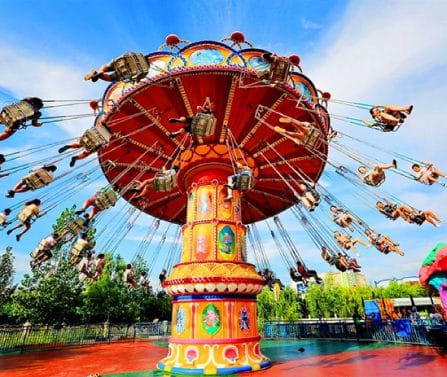
For most hotels the answer is a splash structure, two or three slides and a leisure pool, with shaded seating and a small food outlet. A wave pool is rarely justified below roughly 4,000 m² because of the plant and lifeguard load.
Treat the water park project investment as a phased commitment rather than a single purchase: stage one opens the core amenities and proves demand, and stage two adds slides from operating cash flow.
Slide shells and play panels are commonly produced in fibreglass and stainless-steel frameworks. The finish matters more in a hotel than in a public park: Stainless steel fixings and UV-stable gelcoat keep the area looking new, which is what guests photograph and review.
Guest Experience Details
The difference between a good hotel water park and a great one is usually in the details: shade, seating for parents, a shallow area for toddlers, a visible lifeguard, and changing facilities that do not require walking through the lobby. These cost a fraction of the attractions and drive most of the guest satisfaction.
Measuring the Impact
Track four numbers before and after opening: average rate in the family segment, weekend occupancy, length of stay, and review score for family travellers. Compare against a control period and against similar properties where possible. If the park does not move those numbers, the problem is usually positioning or guest mix, not the ride list.
Risks to Manage
- Noise affecting rooms near the park
- Under-sized changing facilities at peak
- Lifeguard staffing during shoulder seasons
- Heating costs if the park is expected to operate year-round
- Maintenance backlog affecting the guest experience
How to Market the Water Park
The park only increases appeal if guests know about it. Put water imagery in the booking funnel, not only on an amenities page. Show the splash area in the family room gallery, mention it in the room description, and train reservations staff to offer it by name. A park that guests discover at check-in cannot influence the booking decision.
Photographs matter more than copy. Shoot the park with families in it, at the time of day when the light is best, and include the shade and seating that parents care about. Those images become the property’s most effective family marketing asset.
Designing Review-Worthy Moments
Guests review what they photograph. A themed splash structure, a colourful slide tower and a clean, well-shaded deck give them something worth sharing. Small details – a shallow toddler area, a visible lifeguard, a shaded seat for parents – generate the comments that reassure the next family.
None of these details require a larger budget. They require deciding, early, that the park is a guest experience rather than a construction project.
Staffing is the final detail: a hotel park needs a consistent lifeguard roster across weekends and holidays, and guests notice when the same team is present. Continuity builds trust, and trust is what turns a first stay into a repeat booking.
Frequently Asked Questions
Does a water park really increase hotel revenue?
It can, mainly through rate and occupancy in the family segment. The effect depends on the market and on how well the park is marketed.
How big should it be?
Size it to peak occupancy, not to the plot. Most hotel parks fall between 300 and 1,500 m².
Should day passes be sold?
Only with separate access control and enough changing capacity. Decide before the layout is fixed.
Next Step
Send us the room count, guest profile and site area, and we will recommend a park size and mix. Our Dinis water park construction team can deliver the attractions and plant together, and as an amusement equipment supplier we can advise on site integration. For the full cost breakdown behind the review the details, see our cost guide.