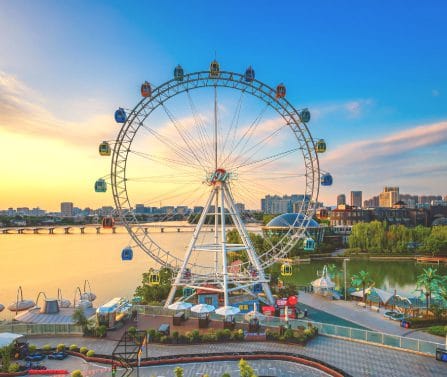
Equipment selection for a commercial water park should start with the guest experience and operating model, not a catalogue. A park’s age mix, admission capacity, season length, staffing, water-treatment capacity, and available site all influence which attractions make sense.
The same discipline used to understand How much does it cost to build a water park applies to product selection: define a complete scope, compare equivalent systems, and include installation and operation in the decision.
Define the Guest Mix and Capacity
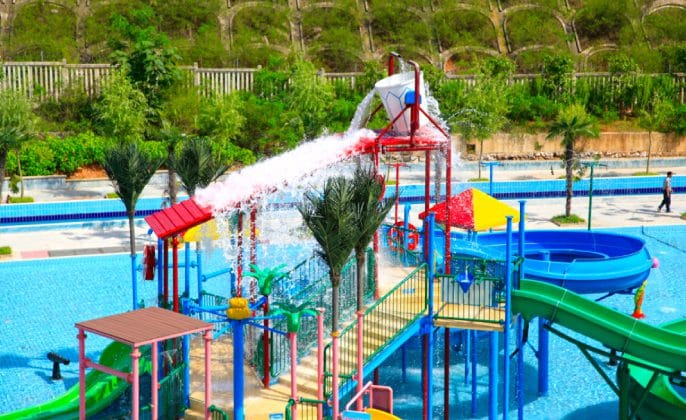
Children’s play, family slides, thrill slides, wave attractions, and lazy rivers serve different audiences. A balanced park may need several categories, while a resort or small commercial venue may prioritize compact family attractions.
Estimate realistic peak and normal attendance before selecting product sizes. Large slides can dominate the visual identity but may not suit a park whose guests mainly seek shallow play and shorter waits.
Equipment Categories to Compare
| Equipment group | Selection criteria | Supporting scope |
|---|---|---|
| Children’s play | Age fit, sightlines, and maintenance access | Shallow water, surfacing, and shading |
| Water slides | Ride type, height, capacity, and landing | Tower, pumps, runout, and queue |
| Wave or pool features | Guest appeal and operating complexity | Water volume, plant, and safety systems |
| Lazy river | Length, access, and tube flow | Circulation, entry points, and maintenance |
| Interactive attractions | Durability and staffing | Controls, water supply, and drainage |
Compare Product Cost with Supporting Cost
The body slide installation cost and water slide installation cost by type usually extend well beyond the attraction itself. Towers, pumps, treatment, drainage, landscaping, changing areas, and control systems must be included.
For each product, ask what flow and electrical supply it requires, how many staff positions it adds, and what spare parts must be stocked. The lowest factory price may be the most expensive choice if it creates excess water treatment or maintenance demand.
Water Quality and Circulation
Treatment should be sized for the entire attraction mix, including simultaneous operation. Confirm filtration, disinfection, testing, backwash, isolation, and emergency procedures. Product choices that trap water or are difficult to drain should be avoided.
Review inspect the splash pad layout and water-system drawings together. The splash pad and slide schematics should align with the circulation strategy rather than becoming separate projects on the same site.
Check how each attraction behaves when one water-treatment train is taken out for service. The park should understand which pools or features must close and whether the remaining operation stays within the approved procedures.
Record that operating condition in the treatment manual and staff training.
The approved response should also appear in the commissioning record.
Materials and Guest Safety
Use materials that resist sun, water, cleaning, and wear. Fasteners need corrosion protection, and all guest-contact surfaces must be smooth and maintainable. Silicone may be used in selected seals or flexible components where the manufacturer specifies compatibility.
Check age limits, access, guard details, slip resistance, and emergency access for every product. Local requirements and the park’s own risk assessment should be part of the selection sheet.
Assess Installation and Site Fit
Large equipment must fit the delivery route, foundation plan, maintenance access, and building or landscape envelope. Hilly sites may need retaining structures, while existing utilities may constrain where pumps and treatment equipment can be placed.
- Confirm the full operating footprint.
- Verify lifting and service access.
- Locate the plant near suitable utilities.
- Keep maintenance routes separate from guests.
- Plan drainage before selecting finishes.
Review the Operating Model
Separate must-have attractions from optional additions
Build a shortlist of attractions required to deliver the promised guest experience. Then compare optional additions against capital cost, water demand, staffing, and maintenance. A well-balanced opening package may outperform a larger collection that stretches operations beyond what the park can support.
Score each product on audience fit, capacity, visual importance, technical risk, and lifecycle cost. Review the scores with operations and finance rather than selecting from appearance alone.
For each shortlisted attraction, prepare a one-page decision sheet with the full operating footprint, utility demand, staffing requirement, annual maintenance needs, and required spares. This gives the project team a common basis for choosing between alternatives and shows which support costs must be funded before opening.
The operator must be able to inspect, clean, isolate, and repair each attraction. Review staffing, training, record keeping, chemical handling, spare parts, and response times. A product that requires specialist support without local availability may reduce uptime.
Compare Suppliers on Complete Evidence
Ask each supplier to provide drawings, equipment schedules, water demand, electrical demand, installation responsibilities, training, and exclusions. A team such as the Dinis commercial water park team should explain how its products integrate with the rest of the water park.
Use one comparison sheet for every proposal. Include equipment, support systems, installation, commissioning, maintenance, and lifecycle cost. A water park equipment solutions supplier can help align attractions with circulation and treatment planning.
Stage the Investment
A commercial water park can grow in phases. Prepare infrastructure locations now for future attractions while opening with a focused package that fits current demand and staffing. Avoid oversizing every system for a hypothetical final park.
Stage gates should preserve future access, utility capacity, drainage routes, and guest flow. The expansion plan should be documented with the initial equipment selection.
Choose Equipment as an Operating System
The right equipment package fits the guests, site, water treatment, maintenance team, and commercial plan. Select products with evidence, compare all supporting costs, and inspect the layout as a complete operating system.