Which Attractions Belong in a Trampoline Park?
Choosing attractions shapes everything else in a trampoline venue, from floor area to staffing to how long a family stays. A thoughtful trampoline park attraction mix plan starts with the guests the business expects to see on a quiet Tuesday morning, not with the feature that photographs best in a showroom. Jumping courts, dodgeball lanes, and foam-pit games give the venue its identity, but the attractions around them decide whether parents come back. Operators who write down the intended visitor profile first, then measure every candidate feature against it, avoid the expensive habit of buying equipment that looks impressive and sits empty for most of the week.
Jumping Zones That Anchor the Whole Venue
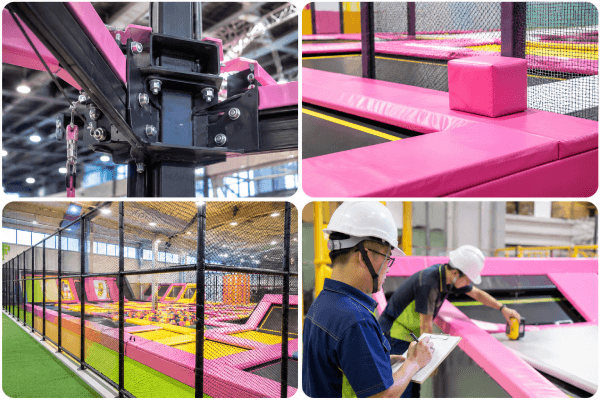
The jumping surface still anchors a commercial trampoline venue attraction package, so it deserves the largest share of both floor space and budget. A well-planned arena mixes open jump beds for free play, separated lanes for dodgeball or basketball, and a foam pit or air bag beneath the highest-energy features. Toddler areas need their own enclosure so small children are never mixed with fast-moving older guests, and spectator seating should face the courts so parents can watch comfortably. Entry and exit points control traffic between zones, which keeps supervision simple and reduces collisions on busy weekends. Every jumping feature adds inspection and maintenance work, so each one should justify the space it occupies.
Add-On Attractions That Fill Quiet Hours
Non-jumping attractions give a trampoline venue a second reason to visit, and they often generate the strongest repeat business. A commercial ninja course appeals to teenagers and adults who enjoy timed challenges and leaderboards, while soft play equipment serves families with younger children. Climbing walls, ropes elements, arcade corners, and party rooms extend average visit length without demanding the same ceiling height as the jumping arena. Each addition changes staffing, insurance, and cleaning routines, so it should be introduced deliberately. The aim is a lineup where one ticket covers several experiences, encouraging families to stay longer, spend more, and return sooner.
Designing an Attraction Mix for Every Age Group
Designing for every age group means planning separate experiences rather than one arena that tries to please everyone. Toddlers need low platforms, soft surfacing, and constant sightlines for parents; school-age children want obstacle challenges and group games; teenagers and adults respond to scoring, leagues, and competitive formats. Placing the loudest attractions away from party rooms and rest areas keeps those groups from spoiling each other’s visits. Staffing follows the same logic, since a venue that understands its age mix can train supervisors for specific zones instead of asking one team to watch everything at once. That clarity improves safety and reduces the number of staff needed at peak times.
Choosing a Partner for the Attraction Lineup
Working with an Miland indoor playground manufacturer keeps the attraction lineup coherent, because one supplier can match frame strengths, safety surfacing, and padding across every feature in the building. Mixing equipment from several vendors usually produces mismatched documentation, and inspectors ask for exactly the certificates a serious manufacturer already holds. Ask how each attraction is engineered for its intended age group, how replacement parts are supplied, and how the pieces fit together during installation. A supplier that installs its own products can also adjust layouts on site instead of shipping corrections, which shortens the path from delivery to opening day.
Planning the Mix Around Real Visitor Flow
Attraction planning only works when it follows the way visitors actually move through the building. Map the route from reception to shoe storage, then to the first attraction, and finally to the cafe, and check that every step feels natural on a crowded Saturday afternoon. The trampolining tradition behind modern parks is a useful reference here, because decades of competitive practice produced standard bed sizes, landing techniques, and safety expectations that translate directly into commercial equipment. Review the mix each quarter against attendance data, average visit length, and spending per head, and be willing to retire a feature that no longer earns the space it uses. Categories: Trampoline Park, Indoor Playground, Family Entertainment Center, Commercial Playground Equipment, FEC Attractions, Attraction Planning. Tags: trampoline park attractions, indoor trampoline park, family entertainment center, fec attractions, trampoline park design, commercial playground equipment. https://www.milandplay.com/product/trampoline-park-for-sale/