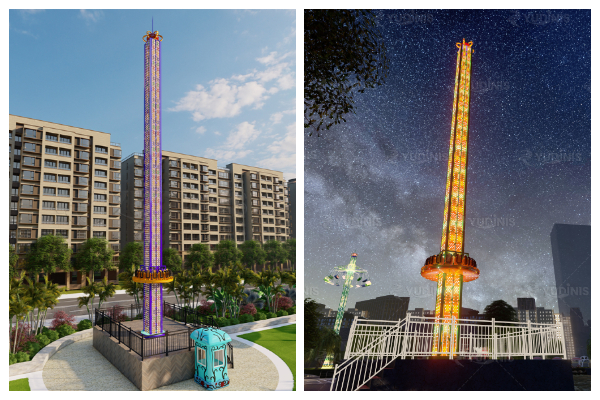
Drop towers are among the most profitable thrill rides in a park, but their earnings depend on how many guests they serve each hour rather than how tall they are. Seats per cycle, cycle time, and loading efficiency decide whether a tower becomes a revenue engine or a queue generator. This article explains how drop tower ride capacity shapes operating efficiency and what operators can do to improve it.
Capacity Is a Product, Not a Number
Hourly capacity equals seats per cycle multiplied by cycles per hour. A 24-seat tower with a two-minute cycle can theoretically serve around 720 guests per hour; the same tower with a three-minute cycle serves about 480. Taller towers often have longer lift times, so a moderate height with fast dispatch can outperform a taller attraction in revenue terms. Always convert seat counts into hourly figures before comparing models.
Cycle Time and Loading Efficiency
Cycle time includes lifting, the drop sequence, braking, unloading, and loading. Loading is usually the variable the operator controls: pre-boarding gates, clear seat numbering, and staffed restraint checks can save fifteen to thirty seconds per cycle, which translates into hundreds of additional riders each day. Efficient loading is the cheapest way to improve drop tower operating efficiency.
Staffing and Queue Design
A tower needs one operator and, at busy times, one or two attendants at the boarding gate. The queue should be designed so that guests reach their seats quickly and exit on the opposite side, with separate routes for arriving and departing guests. Shade, seating, and clear waiting-time information keep guests in line rather than leaving for other attractions.
Energy and Maintenance per Rider
Lift systems consume significant power on every cycle, so capacity directly affects energy cost per guest. A tower running near full capacity spends less electricity per rider than one dispatching half-empty cabins, and the same principle applies to brake wear and other consumable components. Where operating patterns allow, grouping guests to fill cabins is a simple efficiency measure.
Planning for Peaks and Maintenance Windows
Capacity planning should target the busiest hour, not the daily average. If demand regularly exceeds the theoretical figure, extend opening hours, add a second tower, or complement the drop with a related attraction such as a swing tower rides experience that shares the same zone but offers a different sensation. Schedule inspections and lubrication during low-traffic periods so maintenance never cuts into peak revenue.
Capacity and Return on Investment
Purchase price, installation, power, and staffing all form part of the equation, but the number that ultimately matters is revenue per operating hour. Towers with high capacity and short cycles recover their investment faster, and they also reduce the pressure to discount tickets during quiet periods. Model three scenarios – conservative, expected, and peak – before committing to a model.
Ride capacity determines how efficiently a drop tower converts waiting guests into revenue, so specify it deliberately rather than choosing on height alone. Work with an experienced Top Ride Sale tower ride supplier that provides measured throughput figures, and review the general design of a free fall ride to understand lift and braking cycles. To compare models and request a proposal, visit https://www.topridesale.com/drop-tower-ride-for-sale/.
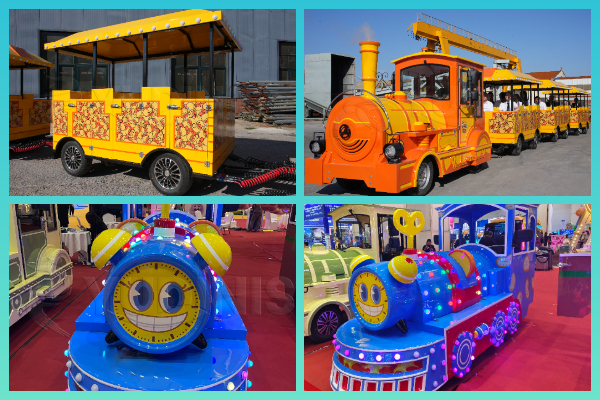
Many parks treat their train as a practical shuttle: it moves guests from the entrance to the far side and back again. Guests, however, remember trains that tell a story. With the right design decisions, a trackless train becomes an attraction in its own right – part of the theme, part of the entertainment, and part of the photographs visitors take home. This guide explains how to turn a themed trackless train ride into a genuine part of your park experience.
Choose a Theme That Belongs to the Park
Theme integration starts with the story. A Christmas park may want a decorated festive train; a children’s park may prefer cartoon characters; a coastal destination may choose an ocean theme with waves and marine colors. The train should look as though it was designed for your park, not bought from a catalogue and repainted. This is the first step in trackless train park theming: deciding what the train represents before choosing its colours and bodywork.
Design the Route as a Story
Even a simple loop can become a narrative. Plan the route to pass your key scenery – a fountain, a themed zone, a garden, a water feature – and align the train’s theme with what guests see along the way. Add stations or slow sections where the train pauses for photographs. A route that follows a story keeps passengers watching instead of checking their phones, and it encourages second rides.
Customise Bodywork, Colours, and Characters
Customisation covers the locomotive shape, carriage design, colour scheme, graphics, seat fabric, and lights. Characters and decorations can be integrated into the body panels rather than added as temporary props, so the train looks coherent from every angle. Depending on your power system, an electric unit can be fitted with a diesel trackless train ride drivetrain equivalent or battery power without changing the external theme. The choice affects running time and cost, not the visual identity.
Match Music, Lighting, and Sound to the Theme
Sound and light complete the illusion. A themed melody, gentle bells, or a soft chime as the train departs, together with warm lighting for evening operation, turns a transport vehicle into a moving attraction. Keep the volume moderate, especially in family areas, and synchronise lighting with seasonal events to keep the train looking new throughout the year.
Integrate Stations and Boarding Areas
Stations can be themed as well: a small Victorian platform, a jungle clearing, or a festive gift house. Signage, ticket points, and seating should use the same visual language as the train. Boarding areas that fit the story encourage guests to treat the ride as an experience rather than a shortcut, and they create natural photo opportunities at no extra cost.
Plan Operations and Maintenance Around the Theme
Themed trains still need practical care. Choose materials that survive weather and cleaning, keep decorative elements removable for maintenance, and train staff to inspect lights and fittings daily. A themed train that always looks clean and complete reinforces the impression of quality across the whole park. With a well-planned design and a reliable supplier, the train becomes one of the most recognisable attractions on site.
When the train matches the park’s story, it stops being transport and becomes entertainment that guests remember. Work with a Dinis themed train supplier experienced in themed carriages and park transport, and explore how the modern trackless train vehicle developed into today’s flexible park rides. To discuss themes, capacities, and routes, visit https://www.dinistrains.com/trackless-train-rides/ and request a design proposal.
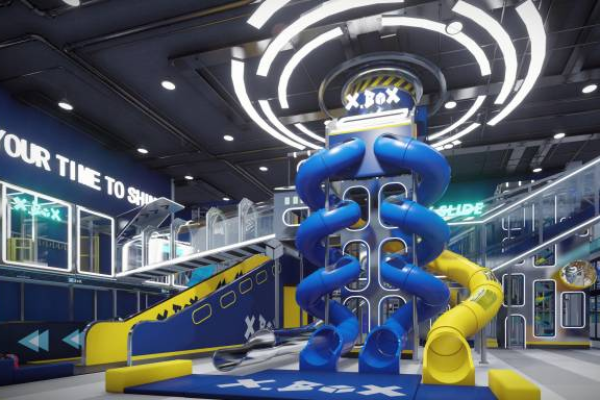
A future-world project is more than an indoor playground painted in neon colors. For amusement manufacturers, FEC operators, investors, and procurement teams, it is a coordinated commercial environment that combines a science-fiction visual system, physical play, digital interaction, circulation, and repeatable guest experiences. A custom Future World indoor park solution should therefore begin with the target market, venue conditions, and operating model. The result can become a recognizable destination rather than a collection of unrelated futuristic decorations.
How Can You Create a Unified Future-World Indoor Park Theme?
Guests understand a theme quickly when the architecture, colors, lighting, graphics, and equipment communicate the same story. A future-world concept may use spacecraft forms, energy stations, control panels, robotic details, illuminated routes, or planetary zones.
However, visual effects need a clear hierarchy. One or two landmark elements can attract attention from the entrance, while secondary details guide visitors through different areas of the park.
The operator can define whether the experience feels like a space mission, future city, scientific laboratory, cyber base, or interstellar station. This decision gives the design team a consistent direction and prevents expensive decorative features from competing with one another.
The theme also needs to remain recognizable in waiting areas, party rooms, rest zones, retail points, and photo areas. A consistent design system strengthens brand recognition and makes the complete venue easier to promote through photographs and short videos.
How Should You Combine Physical Play with Digital Entertainment?
Physical structures remain important because climbing, sliding, balancing, and crawling can serve many guests without requiring an individual device for every visitor. Digital elements can add missions, scores, reactive targets, projections, changing content, or team competitions.
The objective is not to replace physical play. Digital systems can give guests new reasons to repeat familiar activities and compare results with friends.
When buyers compare technology, they can review interactive digital entertainment equipment that fits the same-site concept. The selected system needs to match staff capabilities, maintenance access, guest age, language requirements, and expected session length.
The broader concept of immersive virtual reality technology also helps explain why visual, audio, and interactive feedback can strengthen a visitor’s sense of presence. A future-world park can use these principles without depending entirely on headsets.
How Can You Design Future-World Play Zones for Different Age Groups?
A commercially useful park normally needs more than one intensity level. Younger children may prefer soft-play routes, ball pools, gentle slides, simple interactive walls, and recognizable spaceship shapes.
Older children can use climbing structures, challenge obstacles, faster slides, tunnels, and more complex missions. Teens and adults may respond better to competitive digital games, photo points, timed challenges, or social group activities.
Clear zoning reduces conflicts between age groups and supports easier supervision. Parents can identify suitable areas more quickly, while staff can manage rules and capacity more effectively.
Age-based zoning also helps operators develop several ticket products. Options may include general admission, birthday packages, school visits, group events, membership programs, or premium interactive sessions.
The zones do not need to look disconnected. Consistent colors, graphics, lighting, and storytelling can connect them while their equipment difficulty remains different.
How Can You Improve Guest Flow and Operational Visibility?
An impressive concept can still underperform if guests queue at narrow transitions or staff cannot see important play areas. Designers need to map entry, circulation, waiting, play, rest, and exit flows before finalizing the attractions.
High-demand features need sufficient approach space. Digital stations also require queuing positions that do not block the main routes. Entrances and exits need to be easy for first-time visitors to understand.
Staff sightlines are especially important around slides, climbing zones, ball pools, and interactive stations. Practical service routes make daily operation easier without weakening the themed appearance.
The operator can also position rest areas where parents can observe several zones. This improves convenience while supporting supervision and longer family visits.
What Costs Should You Include in a Future-World Indoor Park Budget?
Buyers often focus on the play-structure price, but the complete investment may also include flooring, themed finishes, lighting control, electrical distribution, network points, ventilation coordination, fire-safety interfaces, installation, freight, and spare parts.
Digital attractions may require stable power, data connections, software setup, content configuration, and staff training. Some systems may also need regular technical support or replacement components.
A realistic procurement package lists what the equipment supplier includes, what the venue contractor supplies, and which interfaces require coordination. This makes different quotations easier to compare and reduces scope gaps during installation.
Investors can also divide the budget into core attractions and optional upgrades. The first phase may prioritize landmark play structures, circulation, and essential digital stations. Later phases can add photo points, interactive content, or new game modules.
What Site Information Do You Need Before Requesting a Park Design?
Provide the floor plan, clear ceiling height, column positions, entrances, emergency exits, target age range, visitor-capacity goal, preferred attractions, theme direction, and budget range.
The design team also benefits from photographs, CAD drawings, shopping-mall requirements, available power, network access, and information about ventilation and fire-protection systems.
Explain how you plan to operate the venue. For example, specify whether the park will focus on general admission, birthday parties, school groups, memberships, or mixed entertainment. This information affects zoning, circulation, equipment selection, and supporting areas.
The Miland themed playground manufacturing team can use this material to coordinate concept design, equipment configuration, production, and installation guidance around the actual venue.
What Should You Expect from a Future-World Indoor Park?
Investors can expect a successful future-world indoor park to integrate storytelling, physical attractions, digital interaction, age-based zoning, efficient circulation, and maintainable infrastructure.
When these elements are planned as one system, the theme supports both guest immersion and commercial operation. It becomes easier for visitors to understand, easier for staff to manage, and easier for the operator to promote.
A detailed site brief is the most productive starting point for developing an appropriate equipment configuration and quotation.
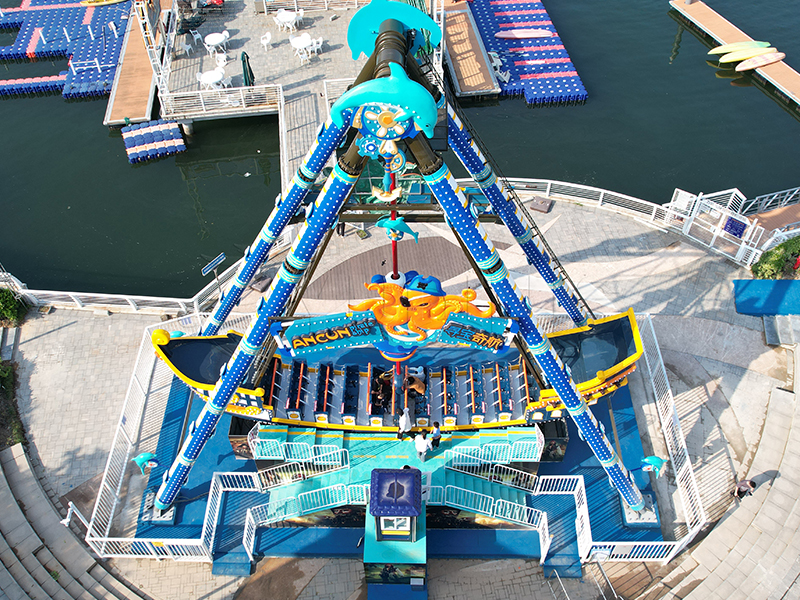
The right model is the one that fits your available land, expected attendance, utility capacity and attraction mix. The supplier lists 24-, 32-, 36/40- and 70-seat configurations, but nominal capacity should not be the only deciding factor. A practical ocean-style pirate boat capacity selection should compare the complete equipment dimensions with realistic peak demand and the operating space required around the ride.
What Are the Published Size Options?
The target page lists the 24-seat model with a 14 × 7-meter equipment area, 10-meter equipment height, 6.7-meter running height and 15 kW driving power. The 32-seat version is shown at 14.6 × 8.5 meters, 12 meters high and 40 kW. The 36/40-seat configuration is listed at 18 × 9 meters, 15 meters high and 37 kW.
The 70-seat version is substantially larger: its published equipment area is 22.2 × 12.6 meters, its equipment height is 20.6 meters, and its total driving power is stated as 135 kW. These figures are useful for preliminary screening. The final technical agreement and project drawing should confirm the exact model, operating envelope and local electrical requirements.
When Is the 24-Seat Model the Better Choice?
A 24-seat ship can suit a community park, commercial plaza, family entertainment venue or compact section of a larger park. It may also be appropriate when the operator wants a mildly thrilling attraction without committing land and electrical capacity to the largest model.
Buyers should distinguish the equipment footprint from the moving envelope. The dedicated 24-seat pirate ship footprint and safety-envelope reference lists a 14 × 7-meter footprint and an 18 × 7 × 11-meter safety envelope. That difference shows why the turntable or base area alone is not enough for site planning.
Who Should Consider 32, 36 or 40 Seats?
The middle configurations can provide a balance between visual scale and passenger capacity. A 32-seat ride may suit a medium park that needs more seats than the compact model but has height or land constraints. The 36/40-seat option can serve a venue with stronger family and teenage traffic and enough space for a wider operating zone.
Management should estimate demand by normal days, weekends and major holidays. Capacity planning is useful because it compares expected demand with available capacity instead of assuming that the largest ride will always be the most efficient investment. Loading time, dispatch frequency, occupancy and downtime all affect realized throughput.
When Does the 70-Seat Model Make Sense?
The 70-seat ocean-style pirate boat is a destination-scale option compared with the smaller models. It is more defensible for a large theme park, resort or high-traffic outdoor venue that has sufficient land, power and staffing. Its height and swing diameter also make it a more prominent visual feature.
However, additional seats create value only when the venue can fill them consistently. A large ride can be underused during ordinary operating periods if attendance is seasonal or if the surrounding attraction mix already absorbs the same audience. The buyer should compare projected riders per dispatch with the total installed and operating cost.
How Much Space Is Needed Beyond the Listed Area?
Every model needs more than the published equipment rectangle. The layout should include queue rails, entrance and exit paths, an operator position, fencing, accessible circulation, maintenance access and emergency routes. Outdoor projects also need drainage, utility routing, foundation coordination and construction access.
A commercial sea-themed swing ship sizing plan should show the equipment boundary, moving envelope and complete operating zone separately. Buyers should not add a generic percentage to the footprint without reviewing the manufacturer’s drawing and local requirements.
What Information Should Be Sent Before Selection?
The inquiry should include a scaled site plan, available length and width, height restrictions, expected daily and peak attendance, preferred thrill level, target age groups, power supply and indoor or outdoor conditions. The operator should also state whether the ride is intended as a supporting family attraction or a major visual centerpiece.