A future-world project is more than an indoor playground painted in neon colors. For amusement manufacturers, FEC operators, investors, and procurement teams, it is a coordinated commercial environment that combines a science-fiction visual system, physical play, digital interaction, circulation, and repeatable guest experiences. A custom Future World indoor park solution should therefore begin with the target market, venue conditions, and operating model. The result can become a recognizable destination rather than a collection of unrelated futuristic decorations.
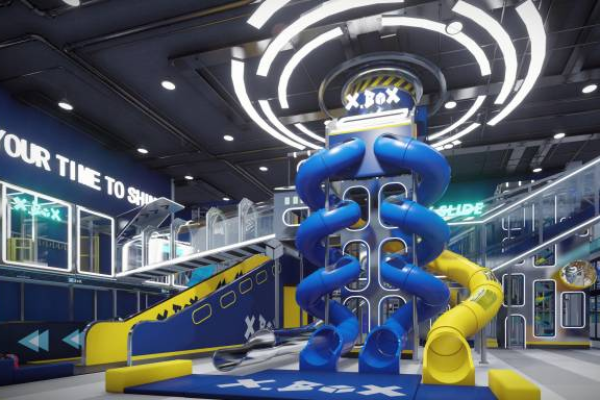
How Can You Create a Unified Future-World Indoor Park Theme?
Guests understand a theme quickly when the architecture, colors, lighting, graphics, and equipment communicate the same story. A future-world concept may use spacecraft forms, energy stations, control panels, robotic details, illuminated routes, or planetary zones.
However, visual effects need a clear hierarchy. One or two landmark elements can attract attention from the entrance, while secondary details guide visitors through different areas of the park.
The operator can define whether the experience feels like a space mission, future city, scientific laboratory, cyber base, or interstellar station. This decision gives the design team a consistent direction and prevents expensive decorative features from competing with one another.
The theme also needs to remain recognizable in waiting areas, party rooms, rest zones, retail points, and photo areas. A consistent design system strengthens brand recognition and makes the complete venue easier to promote through photographs and short videos.
How Should You Combine Physical Play with Digital Entertainment?
Physical structures remain important because climbing, sliding, balancing, and crawling can serve many guests without requiring an individual device for every visitor. Digital elements can add missions, scores, reactive targets, projections, changing content, or team competitions.
The objective is not to replace physical play. Digital systems can give guests new reasons to repeat familiar activities and compare results with friends.
When buyers compare technology, they can review interactive digital entertainment equipment that fits the same-site concept. The selected system needs to match staff capabilities, maintenance access, guest age, language requirements, and expected session length.
The broader concept of immersive virtual reality technology also helps explain why visual, audio, and interactive feedback can strengthen a visitor’s sense of presence. A future-world park can use these principles without depending entirely on headsets.
How Can You Design Future-World Play Zones for Different Age Groups?
A commercially useful park normally needs more than one intensity level. Younger children may prefer soft-play routes, ball pools, gentle slides, simple interactive walls, and recognizable spaceship shapes.
Older children can use climbing structures, challenge obstacles, faster slides, tunnels, and more complex missions. Teens and adults may respond better to competitive digital games, photo points, timed challenges, or social group activities.
Clear zoning reduces conflicts between age groups and supports easier supervision. Parents can identify suitable areas more quickly, while staff can manage rules and capacity more effectively.
Age-based zoning also helps operators develop several ticket products. Options may include general admission, birthday packages, school visits, group events, membership programs, or premium interactive sessions.
The zones do not need to look disconnected. Consistent colors, graphics, lighting, and storytelling can connect them while their equipment difficulty remains different.
How Can You Improve Guest Flow and Operational Visibility?
An impressive concept can still underperform if guests queue at narrow transitions or staff cannot see important play areas. Designers need to map entry, circulation, waiting, play, rest, and exit flows before finalizing the attractions.
High-demand features need sufficient approach space. Digital stations also require queuing positions that do not block the main routes. Entrances and exits need to be easy for first-time visitors to understand.
A commercial futuristic play environment design also needs to reserve access for cleaning, inspection, component replacement, and technical troubleshooting.
Staff sightlines are especially important around slides, climbing zones, ball pools, and interactive stations. Practical service routes make daily operation easier without weakening the themed appearance.
The operator can also position rest areas where parents can observe several zones. This improves convenience while supporting supervision and longer family visits.
What Costs Should You Include in a Future-World Indoor Park Budget?
Buyers often focus on the play-structure price, but the complete investment may also include flooring, themed finishes, lighting control, electrical distribution, network points, ventilation coordination, fire-safety interfaces, installation, freight, and spare parts.
Digital attractions may require stable power, data connections, software setup, content configuration, and staff training. Some systems may also need regular technical support or replacement components.
A realistic procurement package lists what the equipment supplier includes, what the venue contractor supplies, and which interfaces require coordination. This makes different quotations easier to compare and reduces scope gaps during installation.
Investors can also divide the budget into core attractions and optional upgrades. The first phase may prioritize landmark play structures, circulation, and essential digital stations. Later phases can add photo points, interactive content, or new game modules.
What Site Information Do You Need Before Requesting a Park Design?
Provide the floor plan, clear ceiling height, column positions, entrances, emergency exits, target age range, visitor-capacity goal, preferred attractions, theme direction, and budget range.
The design team also benefits from photographs, CAD drawings, shopping-mall requirements, available power, network access, and information about ventilation and fire-protection systems.
Explain how you plan to operate the venue. For example, specify whether the park will focus on general admission, birthday parties, school groups, memberships, or mixed entertainment. This information affects zoning, circulation, equipment selection, and supporting areas.
The Miland themed playground manufacturing team can use this material to coordinate concept design, equipment configuration, production, and installation guidance around the actual venue.
What Should You Expect from a Future-World Indoor Park?
Investors can expect a successful future-world indoor park to integrate storytelling, physical attractions, digital interaction, age-based zoning, efficient circulation, and maintainable infrastructure.
When these elements are planned as one system, the theme supports both guest immersion and commercial operation. It becomes easier for visitors to understand, easier for staff to manage, and easier for the operator to promote.
A detailed site brief is the most productive starting point for developing an appropriate equipment configuration and quotation.