How Does Ride Capacity Affect the Operating Efficiency of a Drop Tower Attraction?

Drop towers are among the most profitable thrill rides in a park, but their earnings depend on how many guests they serve each hour rather than how tall they are. Seats per cycle, cycle time, and loading efficiency decide whether a tower becomes a revenue engine or a queue generator. This article explains how drop tower ride capacity shapes operating efficiency and what operators can do to improve it.
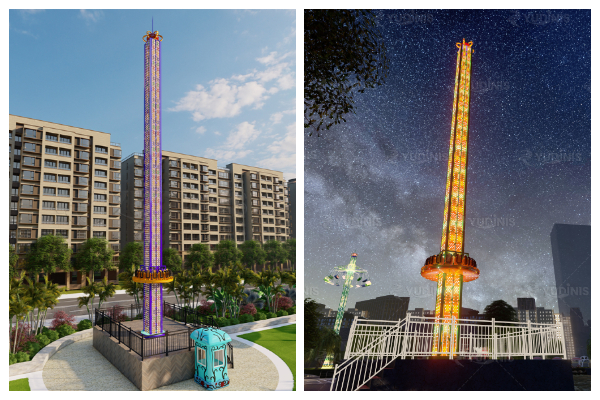
drop tower ride capacity

Capacity Is a Product, Not a Number

Hourly capacity equals seats per cycle multiplied by cycles per hour. A 24-seat tower with a two-minute cycle can theoretically serve around 720 guests per hour; the same tower with a three-minute cycle serves about 480. Taller towers often have longer lift times, so a moderate height with fast dispatch can outperform a taller attraction in revenue terms. Always convert seat counts into hourly figures before comparing models.

Cycle Time and Loading Efficiency

Cycle time includes lifting, the drop sequence, braking, unloading, and loading. Loading is usually the variable the operator controls: pre-boarding gates, clear seat numbering, and staffed restraint checks can save fifteen to thirty seconds per cycle, which translates into hundreds of additional riders each day. Efficient loading is the cheapest way to improve drop tower operating efficiency.

Staffing and Queue Design

A tower needs one operator and, at busy times, one or two attendants at the boarding gate. The queue should be designed so that guests reach their seats quickly and exit on the opposite side, with separate routes for arriving and departing guests. Shade, seating, and clear waiting-time information keep guests in line rather than leaving for other attractions.

Energy and Maintenance per Rider

Lift systems consume significant power on every cycle, so capacity directly affects energy cost per guest. A tower running near full capacity spends less electricity per rider than one dispatching half-empty cabins, and the same principle applies to brake wear and other consumable components. Where operating patterns allow, grouping guests to fill cabins is a simple efficiency measure.

Planning for Peaks and Maintenance Windows

Capacity planning should target the busiest hour, not the daily average. If demand regularly exceeds the theoretical figure, extend opening hours, add a second tower, or complement the drop with a related attraction such as a swing tower rides experience that shares the same zone but offers a different sensation. Schedule inspections and lubrication during low-traffic periods so maintenance never cuts into peak revenue.

Capacity and Return on Investment

Purchase price, installation, power, and staffing all form part of the equation, but the number that ultimately matters is revenue per operating hour. Towers with high capacity and short cycles recover their investment faster, and they also reduce the pressure to discount tickets during quiet periods. Model three scenarios – conservative, expected, and peak – before committing to a model.

Ride capacity determines how efficiently a drop tower converts waiting guests into revenue, so specify it deliberately rather than choosing on height alone. Work with an experienced Top Ride Sale tower ride supplier that provides measured throughput figures, and review the general design of a free fall ride to understand lift and braking cycles. To compare models and request a proposal, visit https://www.topridesale.com/drop-tower-ride-for-sale/.
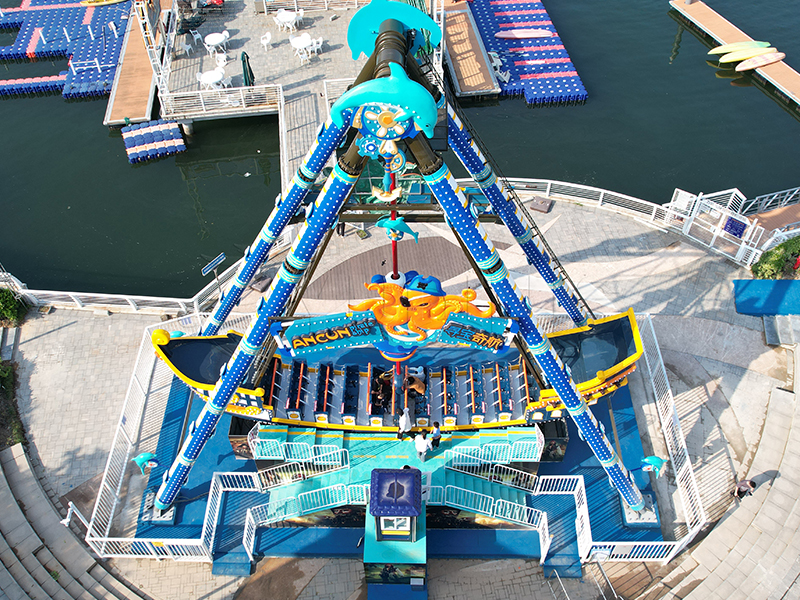
Which Size Ocean Style Pirate Boat Ride Is Right for Your Amusement Park?

The right model is the one that fits your available land, expected attendance, utility capacity and attraction mix. The supplier lists 24-, 32-, 36/40- and 70-seat configurations, but nominal capacity should not be the only deciding factor. A practical ocean-style pirate boat capacity selection should compare the complete equipment dimensions with realistic peak demand and the operating space required around the ride.

What Are the Published Size Options?

The target page lists the 24-seat model with a 14 × 7-meter equipment area, 10-meter equipment height, 6.7-meter running height and 15 kW driving power. The 32-seat version is shown at 14.6 × 8.5 meters, 12 meters high and 40 kW. The 36/40-seat configuration is listed at 18 × 9 meters, 15 meters high and 37 kW.

The 70-seat version is substantially larger: its published equipment area is 22.2 × 12.6 meters, its equipment height is 20.6 meters, and its total driving power is stated as 135 kW. These figures are useful for preliminary screening. The final technical agreement and project drawing should confirm the exact model, operating envelope and local electrical requirements.

When Is the 24-Seat Model the Better Choice?

A 24-seat ship can suit a community park, commercial plaza, family entertainment venue or compact section of a larger park. It may also be appropriate when the operator wants a mildly thrilling attraction without committing land and electrical capacity to the largest model.

Buyers should distinguish the equipment footprint from the moving envelope. The dedicated 24-seat pirate ship footprint and safety-envelope reference lists a 14 × 7-meter footprint and an 18 × 7 × 11-meter safety envelope. That difference shows why the turntable or base area alone is not enough for site planning.

Who Should Consider 32, 36 or 40 Seats?

The middle configurations can provide a balance between visual scale and passenger capacity. A 32-seat ride may suit a medium park that needs more seats than the compact model but has height or land constraints. The 36/40-seat option can serve a venue with stronger family and teenage traffic and enough space for a wider operating zone.

Management should estimate demand by normal days, weekends and major holidays. Capacity planning is useful because it compares expected demand with available capacity instead of assuming that the largest ride will always be the most efficient investment. Loading time, dispatch frequency, occupancy and downtime all affect realized throughput.

When Does the 70-Seat Model Make Sense?

The 70-seat ocean-style pirate boat is a destination-scale option compared with the smaller models. It is more defensible for a large theme park, resort or high-traffic outdoor venue that has sufficient land, power and staffing. Its height and swing diameter also make it a more prominent visual feature.

However, additional seats create value only when the venue can fill them consistently. A large ride can be underused during ordinary operating periods if attendance is seasonal or if the surrounding attraction mix already absorbs the same audience. The buyer should compare projected riders per dispatch with the total installed and operating cost.

How Much Space Is Needed Beyond the Listed Area?

Every model needs more than the published equipment rectangle. The layout should include queue rails, entrance and exit paths, an operator position, fencing, accessible circulation, maintenance access and emergency routes. Outdoor projects also need drainage, utility routing, foundation coordination and construction access.

A commercial sea-themed swing ship sizing plan should show the equipment boundary, moving envelope and complete operating zone separately. Buyers should not add a generic percentage to the footprint without reviewing the manufacturer’s drawing and local requirements.

What Information Should Be Sent Before Selection?

The inquiry should include a scaled site plan, available length and width, height restrictions, expected daily and peak attendance, preferred thrill level, target age groups, power supply and indoor or outdoor conditions. The operator should also state whether the ride is intended as a supporting family attraction or a major visual centerpiece.

The DINIS theme park equipment-planning team can use those inputs to compare the available models, while local professionals must confirm foundations, approvals and site-specific safety requirements. Final selection should follow a reviewed project layout rather than seat count alone. Detailed configurations are available at https://themeparkprojects.com/ocean-themed-swing-ship-ride/