How Should an Amusement Park Merry Go Round Be Positioned to Become the Family Meeting Point?

A carousel becomes the family meeting point when guests can find it without instructions, wait beside it comfortably and use it as a reference for the rest of the day. That is a placement decision, not a decoration decision. This guide explains how to plan an amusement park merry go round meeting point.
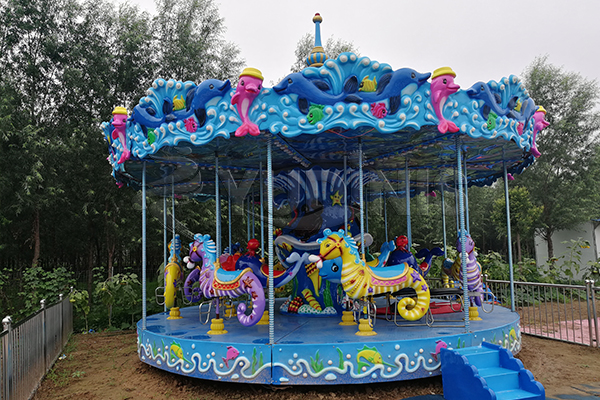
amusement park merry go round meeting point

Place It Where Paths Already Meet

The strongest position is the junction of the main walkways, where families naturally pass in both directions. A carousel placed there is visible from several approaches and becomes a landmark that guests use to describe where they are. A carousel hidden behind a building may still perform well, but it will not function as the meeting point the park needs.

Create a Visible, Lit Landmark

A lit canopy and a bright colour scheme make the ride easy to identify from a distance, which is especially valuable in a large park or a busy evening. Check the sight lines from the entrance, the main plaza and the surrounding paths, and confirm that the lighting does not spill into neighbouring attractions. The engineering and design background is summarised in reference material on carousel as a park landmark.

Provide Seating Around the Ride

Families meet, wait and watch, so the area around the carousel should offer benches, shade and a clear view of the platform. Position the seating outside the queue and the exit route, and leave space for pushchairs. A positioning a merry go round in a family zone plan that includes seating turns the ride into a place to stay, which supports the food and retail units nearby.

Separate the Queue From the Meeting Area

The queue and the meeting point perform different functions and should not share the same ground. Keep the waiting line defined by rails or planting, and leave a clear area beside the ride where families can gather without blocking the entrance. This separation also makes the platform easier for staff to manage during peak periods.

Plan the Surrounding Activities

A carousel anchors a zone best when it sits beside complementary attractions: a playground, a family restaurant, a photo point or a small retail unit. The ride draws the group, and the surrounding activities extend the visit. Reviewing a 68 seat double decker carousel ride shows how a larger model can anchor a plaza while keeping the same familiar layout.

Test the Layout With Real Guests

Before the position is fixed, walk the site at peak times and watch how families move. Note where they stop, where children run and where pushchairs gather, then adjust the seating and the queue accordingly. The general principles of family-friendly park planning support this observational approach, and the ride works best when it follows the way guests already behave.

A merry go round becomes the family meeting point when it sits on the main paths, is visible and lit, offers seating, separates the queue from the gathering area, connects to nearby family activities and is tested with real guests. Operators can review the range from Carousel Manufacturer park planning team and open the product page at https://www.carouselmanufacturer.com/product/amusement-park-merry-go-round/.
When Does a Double Decker Carousel Ride Earn More Per Square Meter Than a Single-Level Carousel?

Two carousels can occupy the same plaza, carry a similar number of passengers per hour and still produce very different revenue, because one uses its vertical space and the other does not. That difference is what makes the double decker question a financial one rather than a matter of taste. This guide explains when a double decker carousel ride revenue case beats a single-level machine on the same ground.

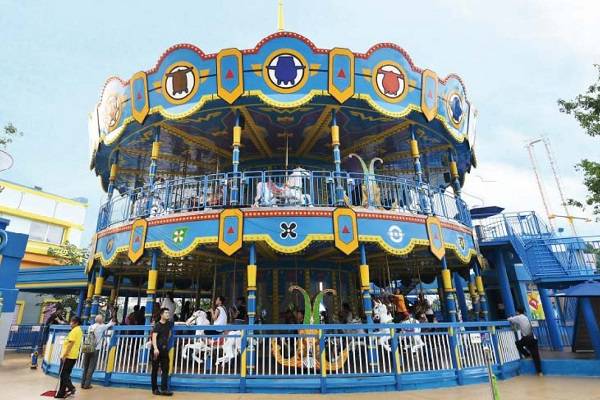
double decker carousel ride revenue

Measure Revenue Per Square Meter, Not Per Ride

The useful comparison is the income the ride generates from the land it occupies. A single-level carousel needs a large platform to reach high capacity, while a two-level machine stacks the same footprint into two rings of riders. In a shopping centre, a rooftop or a compact park, that vertical stacking is the difference between a ride that pays for its land and one that merely fills it.

Check Whether the Extra Capacity Will Be Used

Higher capacity only becomes revenue when demand exists to fill it. Parks with strong evening footfall, tourist peaks or a mixed audience of families and adults usually fill a double decker consistently, while a small seasonal site may run it half empty outside the school holidays. Compare the projected loads with the ride’s cycle time and pricing before assuming that more seats automatically mean more income.

Plan Capacity Around the Second Level

A second deck changes the loading pattern. Guests need time to climb, staff need to check both rings, and the upper level must be cleared before the ride starts. Careful double decker carousel ride capacity planning therefore covers the stairs, the platform width, the gate positions and the number of attendants, not only the seat count. A machine that loads slowly can end up carrying fewer passengers per hour than a well-run single-level ride.

Compare Landmark Value and Sight Lines

A double decker is visible from much further away than a single-level carousel, which makes it a landmark for the venue rather than just an attraction. That visibility has commercial value in a mall atrium, a resort plaza or a park entrance, where the ride advertises itself to visitors who have not yet decided what to do. Check the height limits, the ceiling clearance and the sight lines from the main approach before the design is fixed.

Price the Ride for Its Audience

Visitors pay more for an experience they perceive as special, and a two-level carousel with a grand canopy and a lit upper ring supports a higher ticket price than a standard machine. Operators can also sell the upper deck for events, photographs and private hire. Reviewing a double decker carousel with 68 seats alongside larger models shows how capacity, height and price move together, which makes the pricing decision easier to defend.

Account for Operating and Maintenance Costs

The second level adds stairs, railings, lighting and a larger structure to inspect, and it usually needs one more attendant during busy periods. Those costs should be subtracted from the extra revenue before the investment is judged. The structural principles described in reference material on carousel capacity and design explain why a two-level machine carries a heavier frame and a more demanding inspection routine, and why the operator should budget for both from the first season.

A double decker earns more per square meter when the venue has the footfall, the height and the visibility to use it. Compare revenue per square meter rather than per ride, test whether the capacity will be filled, plan the loading of both levels, judge the landmark value, price for the audience and subtract the extra operating cost. Operators comparing machines can review the range from Carousel Manufacturer double decker range and open the product page at https://www.carouselmanufacturer.com/product/double-decker-carousel-ride-for-sale/.

What Should Operators Consider When Running a Merry Go Round for Both Adults and Children?

A merry go round that carries adults and children together is one of the most efficient attractions in any park. It fills seats with mixed groups, it keeps families together instead of splitting them across two rides, and it stays busy long after the toddler rides have emptied. Running that kind of carousel well, however, takes more planning than simply buying a larger model. This guide sets out what operators should consider with a merry go round for adults and children.

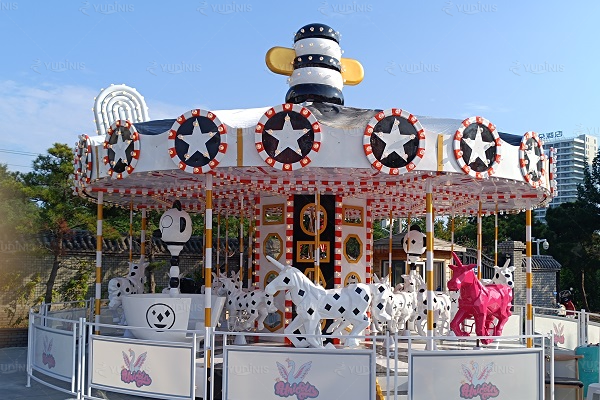
merry go round for adults and children

Check the Seating Mix, Not Just the Seat Count

Adults and children need different things from a carousel. Children want horses that move, visible detail and a seat their parents can stand beside; adults want a comfortable seat, enough legroom and a bench or carriage position if they prefer not to ride a horse. Check the proportion of horses to benches and carriages in the model you are considering, and confirm the load rating of the moving horses, because an adult riding a lightweight horse is a maintenance problem waiting to happen.

Plan Boarding for Mixed Groups

The boarding routine decides how many mixed groups the ride can carry per hour. Families need time to choose seats and settle children, so allow a slightly longer loading window than a children-only carousel, and give the platform assistant enough room to walk the full circumference. Marking the platform edge and the horse positions clearly reduces the time the operator spends answering questions, and it makes the ride feel organised even on a busy afternoon.

Prepare the Restraint and Access Details

Where adults and children share a ride, restraint arrangements and step heights have to suit both. Check that the seat belts adjust over a wide range, that the platform height is comfortable for older visitors, and that guests with limited mobility can be seated without being lifted. Reviewing the double decker carousel for families configuration is useful here, because a second level changes both the boarding pattern and the staffing needed to check every seat.

Train Staff for All-Age Operation

A mixed-age carousel needs an operator who can judge when a child is too small to ride unsupervised and when an adult needs help to board safely. Write the rules down, include the height and supervision policy on the entrance sign, and rehearse the sequence with the team before the ride opens. Staff who know the policy answer guests confidently, and confident answers reduce arguments at the gate, which is where most complaints about carousels begin.

Maintain for Heavier Loads

An adult-carrying carousel works harder than a children’s model. Inspect the horse mountings, the platform deck, the restraint anchors and the drive at the intervals the manufacturer specifies, and keep a record of any repeated adjustment. Understanding the basic carousel ride design helps maintenance teams recognise which components carry the load and which are decorative, so that inspection time is spent where it matters.

Position and Price the Ride for Its Audience

Finally, place the ride where adults pass in the evening as well as where families gather in the afternoon, and consider whether a longer cycle or a different price point suits the audience. Parks that treat the carousel as a family meeting point, rather than as a children’s ride, usually find that it becomes one of the highest-earning attractions per square metre in the park. A carousel for mixed age visitors should be marketed that way from the day it opens.

An all-age carousel is a seating, staffing and maintenance project as much as a purchase. Choose the seating mix carefully, plan mixed-group boarding, prepare the restraints and access details, train the operators, maintain for heavier loads and place the ride where adults already walk. Operators comparing models can review the range from Carousel Manufacturer ride range and start from the product page at https://www.carouselmanufacturer.com/product/adult-merry-go-round-for-sale/.