Which Ferris Wheel Cabin Configuration Best Fits a Commercial Amusement Park?

Two wheels of the same height can be very different businesses. Cabin count, enclosure, accessibility and lighting decide throughput, who can ride and how the wheel looks after dark.

Two parks can order Ferris wheels of the same height and end up with very different businesses. The difference is usually the cabins. Seating layout, enclosure, accessibility and lighting decide how many passengers can be loaded in an hour, who can ride, and what the wheel looks like after dark. Cabin configuration is therefore one of the few decisions on a Ferris wheel project that rewards being specified carefully at the start.

This guide covers the configurations in common commercial use, and the questions that separate a wheel that suits a family park from one that suits an observation deck in a city centre. Buyers starting from the product side can review the options on this Ferris wheel for sale page first.
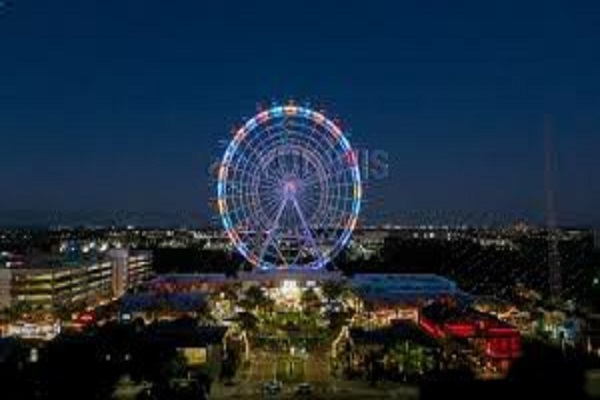
amusement park ferris wheel for sale

Cabin Count or Cabin Capacity

The first decision is whether to fit more cabins with fewer seats, or fewer cabins with more seats. More cabins usually means a shorter wait between departures, because passengers board two or three cabins at a time while the wheel turns slowly. Fewer, larger cabins give groups and families a chance to ride together, which matters on a family site.

Work out the practical throughput rather than relying on the theoretical figure. The number that matters is passengers per hour at a realistic loading rate, including the time taken to secure every restraint and close every door. A configuration that looks generous on paper is often limited by the loading platform.

Open, Semi-Enclosed and Fully Enclosed Cabins

Open cabins are the traditional fairground format. They cost less, weigh less and give passengers an unobstructed view, and they suit warm, dry climates and seasonal operation.

Semi-enclosed cabins with glazing and a roof keep the view while protecting passengers from wind and light rain. They extend the usable season considerably and are the usual choice for parks that trade through autumn and winter.

Buyers who settle on that format are normally looking for an enclosed Ferris wheel for sale with a wider boarding platform, because the enclosure and the platform have to be designed together.

Fully enclosed cabins with sealed glazing, ventilation and climate control belong to the largest wheels and to city installations where the ride operates in all weathers and at night throughout the year. They carry a higher unit cost, more weight and a stricter maintenance regime, but they are what makes year-round operation defensible.

Seating Layout and Accessibility

Bench seating across the cabin is the simplest arrangement and the fastest to load. Face-to-face seating is more comfortable for longer rides and is popular on observation wheels where a single rotation takes twenty minutes or more.

Accessibility should be decided at specification stage, not retrofitted. At least one cabin designed for a wheelchair user, with a wider door and a level or ramped access route to the boarding platform, changes who can buy a ticket and is increasingly expected by municipal clients and public-sector operators. Confirm with the manufacturer how such a cabin is loaded while the wheel is moving or stopped.
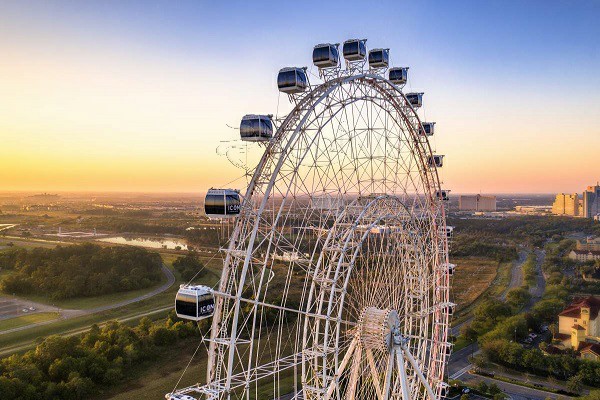
kiddie ferris wheel cabin configuration

Special and VIP Cabins

A single themed cabin can change how the wheel is marketed. Restaurant or lounge cabins, glass-floor cabins and wedding or celebration cabins are all available on larger wheels, and they justify a premium ticket price because the ride becomes an occasion rather than a loop.

Where such a cabin is planned, raise it with the manufacturer early. It changes the balance of the wheel, the structure of the cabin hanger and the loading procedure, and it is much easier to design in than to add later.

Lighting Inside and Outside the Cabin

Cabin lighting is not decoration. It determines how the wheel reads from a distance at night and how photographs of it circulate on social media. Modern installations use addressable LED strips that can be programmed for seasonal themes, with the control system integrated into the wheel’s own controls rather than run from a separate building.

Ask how the lighting is powered, how it is protected from water ingress, and what access is provided for replacing a failed unit. Lighting that cannot be serviced without stopping the ride becomes a recurring cost.

Loading, Unloading and Maintenance Access

The configuration has to work with the platform. Confirm how many cabins can be loaded simultaneously, whether the platform is level with the cabin floor, and how the operator manages passengers who need more time. On a busy wheel, the platform arrangement, not the cabin, is usually the constraint on throughput.

Maintenance access follows the same logic. Cabins that can be opened and inspected from the platform reduce downtime compared with cabins that require a separate lifting procedure. Ask for the daily and annual inspection routine for the cabin type you are considering, and check that it can be completed within the hours the park is closed.

Specifying the Cabin in the Contract

The cabin specification should be written into the order: number of cabins, seats per cabin, enclosure type, glazing, seating layout, restraint type, lighting, ventilation and the accessible cabin. Buyers comparing a custom Ferris wheel for sale option with a standard model should also compare what the higher price actually changes, and whether the difference is in the cabin or in the structure.

For parks that trade in variable weather, a configuration with enclosed cabins and a wider boarding platform is often worth more than an extra few metres of height, because it protects revenue on the days that would otherwise be lost.

Dinis builds Ferris wheels in a range of sizes and cabin formats and acts as a Ferris wheel manufacturer for parks, malls and resort projects. Tell us the climate, the visitor profile and the type of operation you are planning, and we will recommend a cabin configuration that fits – including the wheel’s reference specification here: https://www.kidsparksolutions.com/ferris-wheel-for-sale/

Successful Installation of a LED Ferris Wheel in a Middle East Park

Ferris wheels have long been symbolic landmarks in amusement parks. In recent years, the integration of advanced LED lighting systems has transformed them from classic attractions into powerful visual icons—especially in regions where night-time tourism plays a critical role.

This article presents a successful installation case of a LED Ferris wheel in a Middle East park, highlighting the planning process, technical considerations, and key factors that ensured a smooth and reliable deployment.

kids Ferris wheel amusement ride

Project Background: Why a LED Ferris Wheel?

The client operates a large outdoor park in the Middle East, located in a region with:

High evening and night-time visitor traffic

Strong demand for visually striking attractions

A climate characterized by high temperatures and strong sunlight

The goal was clear:
to install a Ferris wheel for sale that functions as both an amusement ride and a night-time landmark, enhancing the park’s identity and extending visitor stay after sunset.

A LED Ferris wheel was selected as the optimal solution.

Key Challenges of Installing a Ferris Wheel in the Middle East

Installing large amusement rides in the Middle East presents unique challenges that differ significantly from installations in temperate regions.

1. Climate and Environmental Conditions

Extreme daytime temperatures

Strong UV exposure

Occasional sand and dust storms

These factors directly affect:

Steel structure durability

Electrical systems

Lighting components

2. Local Regulations and Safety Standards

The project required compliance with:

Local municipal construction regulations

International amusement ride safety standards

Electrical safety and grounding requirements

Early coordination with local authorities was critical.

Technical Specifications of the LED Ferris Wheel

To meet both performance and environmental requirements, the Ferris wheel for urban landmarks was customized for the project.

Key features included:

High-strength steel structure with anti-corrosion treatment

Weather-resistant LED lighting system designed for high temperatures

Programmable LED patterns for branding and special events

Energy-efficient lighting to reduce operational cost

Reinforced electrical control system with redundancy

The LED system was engineered to remain stable and vivid even under prolonged heat exposure.

Installation Process: From Delivery to Operation

1. Foundation and Civil Preparation

Before equipment arrival, the park completed:

Reinforced concrete foundations

Underground electrical conduits

Load-bearing verification

This preparation ensured the Ferris wheel for city parks could be installed without delays.

2. On-Site Assembly

The installation followed a structured sequence:

Main steel structure assembly

Wheel rim and spoke installation

Cabin mounting and balancing

LED lighting integration

All critical steps were supervised by experienced technical engineers.

Customization Ferris wheel for kids

3. Electrical and LED System Commissioning

Special attention was given to:

Heat-resistant wiring

Secure grounding systems

LED controller testing under night-time operation

Multiple test runs were conducted to verify smooth rotation and lighting synchronization.

Results After Installation

Following commissioning, the LED Ferris wheel quickly became one of the park’s most recognizable features.

Operational Results

Stable operation during peak evening hours

Smooth ride performance with minimal vibration

Consistent LED brightness and color accuracy

Commercial Impact

Increased night-time visitor traffic

Strong social media exposure due to visual appeal

Enhanced park branding and skyline visibility

The Ferris wheel now serves as both an attraction and a marketing asset.

Key Success Factors

Several factors contributed to the success of this Middle East project:

Climate-adapted design
Materials and electrical systems were selected specifically for high-temperature environments.

Professional installation support
Experienced engineers ensured correct assembly and alignment.

Reliable LED technology
Industrial-grade LED components ensured long-term performance.

big-ferris-wheel-for-amusement-parks-ports-scenic-spots-etc

Close coordination with the client
Clear communication reduced delays and avoided design mismatches.

Lessons for Future Ferris Wheel Projects in the Middle East

This project demonstrates that:

LED Ferris wheels are highly suitable for Middle East parks

Climate adaptation is more important than visual design alone

Proper planning significantly reduces long-term maintenance cost

For parks seeking to enhance night-time attractions, a customized LED Ferris wheel offers both aesthetic and commercial advantages.

Conclusion

The successful installation of this LED Ferris wheel proves that, with the right engineering and planning, large amusement rides can thrive even in demanding environments.

By combining structural reliability, advanced LED technology, and professional installation, the project delivered a landmark attraction that continues to generate value for the park.

If you are considering a LED Ferris wheel for a Middle East park or similar climate, working with an experienced manufacturer and installation team is essential for long-term success. Go through our official website for more detailed information: https://www.kidsparksolutions.com/ferris-wheel-for-sale/