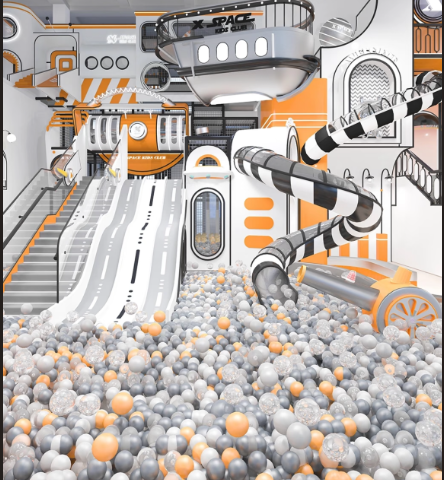
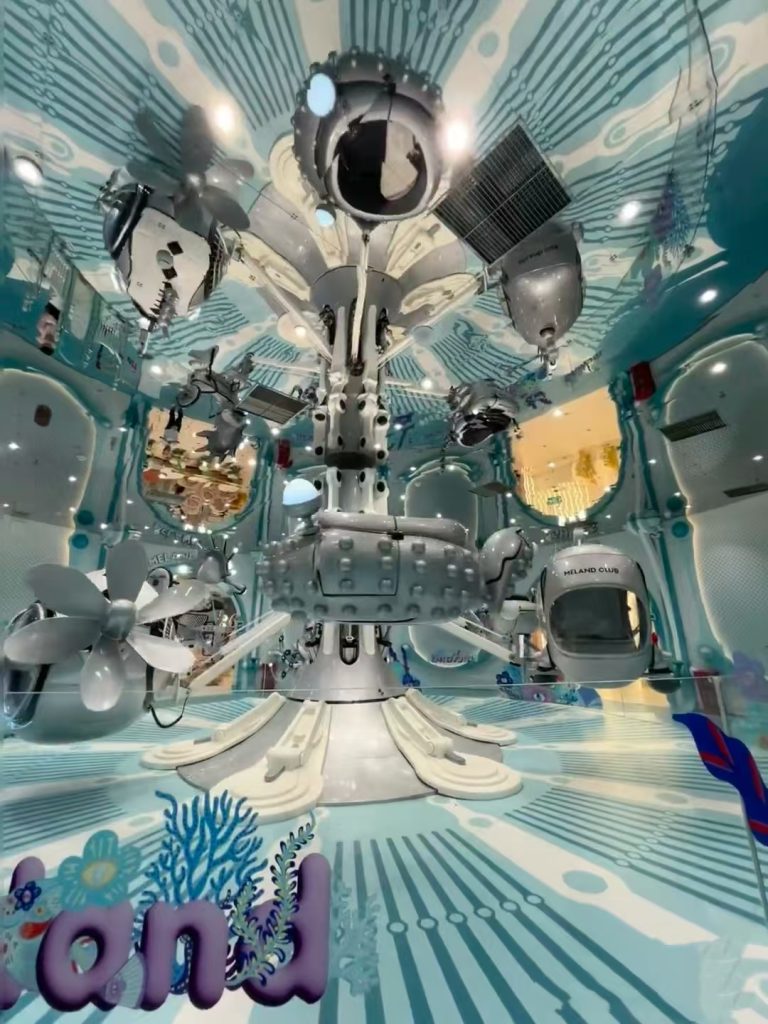
For global entertainment investors seeking a high-ROI venture, aspace theme indoor playground represents a timeless and highly profitable opportunity. To help commercial buyers evaluate this venture, Miland, a leading global manufacturer professionally producing premium indoor amusement equipment, analyzes this concept across four strategic dimensions: features, target audience, venue suitability, and investment costs.
Project Features: Immersive Sci-Fi Aesthetics
Unlike generic soft play areas, a galactic adventure park stands out with its distinct visual identity. It integrates futuristic aesthetics with diverse attractions, including rocket-shaped climbing towers, glowing planet ball pools, high-speed fiberglass slides, and professional trampoline park equipment. By utilizing vibrant LED lighting and customized 3D design, the park transforms a standard space into an otherworldly journey. This high level of immersion naturally encourages social media word-of-mouth, providing operators with continuous organic marketing.
Target Audience: Expanding the Age Demographics
A major advantage of this sci-fi concept is its broad appeal, effectively expanding your target market. While toddlers enjoy safe, sensory-rich outer space soft play blocks and crawling tunnels, older children and teenagers are drawn to more challenging zones, such as cosmic ninja courses, high-tension trampoline mats, and interactive digital projection walls. By catering to a wide age range from 2 to 15 years old, park owners can secure higher family ticket sales and extended playtime per visit.
Venue Suitability: Versatility for Commercial Building Types
This concept offers exceptional architectural adaptability, making it compatible with various commercial building types. Whether you are leasing a high-ceiling space in a modern shopping mall, renovating an old warehouse, or designing an independent Family Entertainment Center (FEC), the layout can be tailored precisely to your specific floor area and structural layout. A prime example is Miland’s recent landmark project in Uzbekistan—a massive 1,500㎡ comprehensive indoor park customized perfectly to fit the building’s ceiling height and structural pillars.
Construction Cost & Pricing: Maximizing ROI
When evaluating the construction price, the total investment is primarily influenced by the venue size, material selection, and equipment complexity. A comprehensive quote usually includes bespoke 3D conceptualization, high-end manufacturing, and worldwide installation services. While a premium sci-fi setup may require a higher initial budget than traditional playgrounds, its durability, lower daily operation costs, and unique market appeal ensure a significantly faster payback period and superior long-term ROI.
Why Partner with Miland?
Turning a blueprint into a thriving, safe business landmark requires an experienced manufacturing partner. Milandprovides a seamless, one-stop solution for amusement parks worldwide. At Miland, safety and structural integrity are our absolute priorities. We ensure every square meter complies with rigorous international safety certifications (such as CE, TUV, and ASTM). From initial 3D design to the final tightening of a trampoline court on-site, Miland guarantees flawless assembly and premium quality.
Ready to launch your cosmic project? Contact Miland today for a FREE customized 3D design and professional pricing consultation!
For carnival operators seeking a high-energy, mid-capacity thrill ride that delivers strong crowd engagement and repeat riders, the 24 seats Disco Tagada ride is a strategic investment.
Compact enough for traveling fairs yet powerful enough to create a vibrant attraction zone, this ride has become a staple in carnivals targeting teenagers and young adults.
This guide analyzes its technical structure, investment cost, revenue logic, and purchasing considerations from an operator’s perspective.
Amusement park disco tagda amusement ride
What Is a 24 Seats Disco Tagada Ride?
A Disco Tagada ride features:
Circular seating platform (24 passengers)
Pneumatic or hydraulic bouncing motion
Rotational movement
Music-synchronized control system
Surrounding safety rail structure
Unlike traditional flat rides, Tagada combines centrifugal force + vertical bounce, producing a dynamic and unpredictable thrill effect. Riders sit without individual restraints, relying on the circular padded seating and platform motion — which enhances excitement but requires strict operational discipline.
Why Carnival Owners Choose the 24-Seat Model
The 24-seat configuration is widely regarded as the optimal balance between:
Passenger capacity
Transportation efficiency
Setup complexity
Revenue per cycle
Compared to 16-seat models, it increases throughput without dramatically expanding footprint. Compared to 36-seat versions, it remains easier to transport and assemble for traveling carnivals.
$28,000 – $45,000 (depending on configuration, lighting system, and hydraulic components)
Price variables include:
Control system brand
Steel structure thickness
LED lighting package
Trailer-mounted vs. base-mounted model
Certification requirements (CE, ASTM)
16 seats Disco tagada ride
Carnival operators should focus not only on upfront cost but also on long-term durability and component quality, particularly hydraulic cylinders and gearbox systems.
Revenue and ROI Analysis
Tagada rides are known for:
High rider turnover
Strong teenage demand
Repeat ride behavior
Night-time visual appeal
Example Revenue Scenario
Ticket price: $5 per rider
24 riders per cycle
12–15 cycles per hour
5 peak hours per event
Potential gross revenue per day can reach attractive levels when attendance is strong.
The average payback period, under steady event scheduling, may range from one to two carnival seasons, depending on location and attendance volume.
Night operation is a major profit driver. A visually dynamic Tagada often becomes a focal point of the carnival midway.
Transportation and Setup Considerations
For traveling carnivals, mobility is critical.
Key factors to confirm before purchase:
Trailer compatibility
Hydraulic leveling system
Setup time (ideally 4–6 hours)
Crew requirements (typically 3–4 technicians)
Choosing a design optimized for rapid assembly reduces labor cost and maximizes event readiness.
Safety and Compliance
Although riders are not individually restrained, safety engineering is essential.
Buyers should verify:
Reinforced platform structure
Anti-slip padded seating
Stable hydraulic motion control
Emergency stop system
International safety certification (if exporting)
Insurance providers may also request compliance documentation before approving coverage.
Who Should Invest in a 24 Seats Disco Tagada Ride?
This ride is particularly suitable for:
Traveling carnivals
Medium-sized fairs
Youth-focused event operators
Seasonal amusement setups
It may be less suitable for parks focused primarily on small children or family demographics.
24 seats disco tagada amusement ride
Final Verdict: Is It Worth Buying?
A 24 seats carnival Tagada ride represents a high-energy, mid-investment thrill attraction with strong revenue potential for carnival owners targeting teenage markets.
Properly operated and marketed, this ride can serve as a central crowd-puller and revenue generator within a carnival lineup.
If structured correctly, it is not simply an equipment purchase — it is a strategic revenue asset for competitive carnival operations. Just go through our official website for more professional information: https://www.outdoorparkrides.com/24-seats-disco-tagada-ride-for-sale/
Ferris wheels have long been symbolic landmarks in amusement parks. In recent years, the integration of advanced LED lighting systems has transformed them from classic attractions into powerful visual icons—especially in regions where night-time tourism plays a critical role.
This article presents a successful installation case of a LED Ferris wheel in a Middle East park, highlighting the planning process, technical considerations, and key factors that ensured a smooth and reliable deployment.
kids Ferris wheel amusement ride
Project Background: Why a LED Ferris Wheel?
The client operates a large outdoor park in the Middle East, located in a region with:
High evening and night-time visitor traffic
Strong demand for visually striking attractions
A climate characterized by high temperatures and strong sunlight
The goal was clear: to install a Ferris wheel for sale that functions as both an amusement ride and a night-time landmark, enhancing the park’s identity and extending visitor stay after sunset.
A LED Ferris wheel was selected as the optimal solution.
Key Challenges of Installing a Ferris Wheel in the Middle East
Installing large amusement rides in the Middle East presents unique challenges that differ significantly from installations in temperate regions.
1. Climate and Environmental Conditions
Extreme daytime temperatures
Strong UV exposure
Occasional sand and dust storms
These factors directly affect:
Steel structure durability
Electrical systems
Lighting components
2. Local Regulations and Safety Standards
The project required compliance with:
Local municipal construction regulations
International amusement ride safety standards
Electrical safety and grounding requirements
Early coordination with local authorities was critical.
For parks seeking to enhance night-time attractions, a customized LED Ferris wheel offers both aesthetic and commercial advantages.
Conclusion
The successful installation of this LED Ferris wheel proves that, with the right engineering and planning, large amusement rides can thrive even in demanding environments.
By combining structural reliability, advanced LED technology, and professional installation, the project delivered a landmark attraction that continues to generate value for the park.
If you are considering a LED Ferris wheel for a Middle East park or similar climate, working with an experienced manufacturer and installation team is essential for long-term success. Go through our official website for more detailed information: https://www.kidsparksolutions.com/ferris-wheel-for-sale/
Choosing the right un-powered pedal roller coaster amusement ride for your park or attraction involves several considerations to ensure it aligns with your space, target audience, budget, and operational goals. Pedal-powered coasters offer a unique interactive experience that can attract a wide range of visitors, but selecting the appropriate model requires careful evaluation. Below are key factors to consider when choosing the right pedal roller coaster for your park:
1. Target Audience
Understanding your audience is crucial to selecting the right coaster model. Pedal coasters are especially popular with:
Families: Ideal for parks that cater to families with children, as they allow for a fun, hands-on experience without the intensity of traditional roller coasters.
Adventure Seekers: Some models allow riders to exert more control over the experience, which can be appealing to visitors looking for an interactive thrill.
Age Group Considerations: Pedal coasters typically have minimum height or age restrictions, so choosing a model that suits your demographic (children, teens, adults) is essential.
Questions to ask:
Does the coaster need to accommodate young children, teens, or adults?
What level of physical activity should the ride require (light pedaling vs. more effort)?
customized Pedal Roller Coaster Amusement Ride for Sale
2. Space and Layout
Pedal roller coasters are more flexible in terms of the space required compared to traditional roller coasters, but the layout still needs to be carefully planned:
Track Length: Consider the available land and how much space you have for the track. Pedal coasters can have compact layouts, but some models feature larger tracks with more curves and hills.
Height and Terrain: Depending on the model, pedal coasters may require a relatively flat area or be designed for more hilly terrain. If your park has limited elevation changes, look for a coaster designed to be efficient with minimal vertical drops or turns.
Space for Pedal Mechanism: Pedal-powered vehicles ride require space for the pedal mechanism, seating, and safety harnesses. Make sure there’s enough space in the ride’s footprint for both the track and the vehicles.
Questions to ask:
Do you have enough land for the track layout you want?
Is the terrain conducive to a pedal-powered ride, or will you need to modify it?
3. Ride Intensity
Pedal roller coasters vary widely in terms of how physically demanding the ride is:
Family-Friendly: Some models are designed to be gentle and smooth, requiring only light pedaling, making them suitable for young children or families with varying levels of fitness.
High-Thrill: Other models can accommodate more intense experiences where the rider’s effort in pedaling directly impacts the speed and thrill, which could appeal to older children, teens, or even adults looking for a challenge.
Questions to ask:
What level of physical engagement do you want for riders?
Will the ride be family-friendly or more geared toward thrill-seekers?
4. Safety Features
Safety is paramount, especially when dealing with interactive rides where riders control part of the experience. Pedal roller coasters kids rides need to be designed with specific safety features:
Safety Restraints: Ensure that the coaster has reliable and comfortable restraints, such as lap bars or shoulder harnesses, to keep riders secure during the ride.
Braking Mechanism: The braking system is crucial, especially since riders are in control of their speed. Some pedal coasters feature automatic braking that activates when the rider slows down or stops pedaling, ensuring a safe and controlled descent.
Pedal Roller hot-sale
Operator Controls: Ensure there are operator-controlled safety mechanisms in case of malfunction or emergency. These might include emergency stop buttons or a manual override system for the ride.
Questions to ask:
Does the pedal coaster have reliable safety features for all age groups?
Are there emergency mechanisms in place for safety?
5. Operational Considerations
Pedal-powered coasters have different maintenance and operational needs compared to traditional coasters:
Maintenance: Pedal roller coasters typically have fewer mechanical components than motorized roller coasters, but the pedal systems, braking, and track will still require regular maintenance. Consider the durability and ease of upkeep.
Energy Efficiency: One of the benefits of pedal coasters is that they don’t rely on electricity or fuel to power the ride, which can make them more environmentally friendly and cost-effective in terms of energy consumption. What’s more, steel pedal roller coaster is more durable.
Staffing: Some pedal coasters might require an operator to supervise the ride and assist with loading/unloading passengers. Ensure you have the necessary staff and operational procedures in place.
Questions to ask:
How much maintenance will the ride require?
Will you need specialized staff to operate and supervise the ride?
How long is the expected lifespan of the pedal coaster?
6. Design and Theme Integration
Pedal roller coasters can be designed to match a specific theme or aesthetic, enhancing the overall visitor experience:
Theming Options: Many pedal coaster manufacturers offer customizable designs, allowing you to integrate themes such as trains, animals, or nature elements into the ride.
Visual Appeal: The appearance of the ride can impact its appeal. If your park is highly themed, you may want a coaster that blends seamlessly with the surrounding environment or storyline. Customized pedal roller coaster is more attractive.
Questions to ask:
Does the ride fit with your park’s overall theme and aesthetic?
Are there customization options that align with your park’s brand or theme?
7. Cost and Budget
The cost of a pedal roller coaster will vary depending on size, customization, and additional features. When budgeting, consider:
Initial Purchase: Pedal coasters are generally more affordable than motorized roller coasters, but prices still range from $10,000 to $100,000 or more, depending on the model.
Operational Costs: Although pedal coasters have lower operating costs compared to traditional roller coasters, you should still factor in maintenance, staffing, and any potential infrastructure needs (track, safety systems, etc.).
Return on Investment: Pedal coasters can be a great way to add a unique attraction without the high costs of traditional roller coasters, potentially leading to increased visitor engagement and satisfaction.
Questions to ask:
Does the cost fit within your budget, both for purchase and long-term operation?
What is the expected ROI in terms of increased foot traffic or ticket sales?
8. Vendor Reputation and Support
Finally, consider the reputation and support provided by the manufacturer:
Manufacturer Reputation: Choose a well-established vendor with experience in designing and building pedal roller coasters. This ensures the ride is safe, durable, and effective.
Customer Support: Ensure the manufacturer provides excellent customer service and support, including maintenance resources, warranty information, and spare parts availability.
Questions to ask:
Does the manufacturer have a solid reputation for quality and safety?
What kind of after-sales support and maintenance do they offer?
Final Considerations
In summary, choosing the right pedal roller coaster for your park requires balancing several factors, including the ride’s intensity, design, audience appeal, space requirements, and budget. By carefully considering these factors, you can select a pedal roller coaster that enhances the visitor experience, fits within your operational capacity, and provides a fun and unique attraction for years to come.
A Rainbow Slide amusement ride is different from a standard playground slide. The Rainbow Slide in an amusement park context is often a large, multi-lane slide where individuals use a mat or a sack to slide down. These slides are typically very colorful, resembling a rainbow, and can be quite steep and long, providing an exhilarating experience.
The installation of such large amusement rides is a complex process that usually requires professional installation teams who are experienced in setting up such equipment. Here’s a general overview of what the process might entail:
Professional Consultation: Consult with a professional company that specializes in the installation of amusement park rides. Also, follow the guidance from amusement ride manufacturer.
Site Assessment: Evaluate the area where the slide will be installed to ensure it meets size, ground condition, and clearance requirements.
Permits and Regulations: Obtain necessary permits and ensure compliance with local and national safety regulations.
Installation Process
Foundations: Install foundations, which can include concrete footers, to support the structure.
Structural Assembly: Erect the metal framework that will support the slide lanes. This may involve cranes, scaffolding, and other heavy machinery.
Slide Installation: Attach the slide lanes to the structure. These might be made of fiberglass or another durable material.
Safety Features: Install handrails, stairs, queuing lines, and safety signage.
Finishing Touches: Apply any final decorations, paint, and cosmetic features to make the ride visually appealing.
Testing: Conduct rigorous safety tests to ensure the rainbow slide is operating correctly and safely.
Inspections: Have the ride inspected by certified professionals to ensure it meets all safety standards.
Post-Installation
Training: Train staff on proper operation and safety procedures.
Maintenance Plan: Establish a maintenance schedule to regularly inspect and maintain the ride.
Specialist Rainbow Slide China Manufacturer and Supplier
The actual installation of a Rainbow Slide amusement ride will be highly specific to the manufacturer’s guidelines and should adhere to all industry safety standards. It is essential that only qualified professionals perform the installation, as the safety of the riders depends on the ride being correctly assembled and maintained.